Home > Conditions > Keloids
Keloid Treatment Singapore
Keloid Treatment Singapore
Keloids are a form of abnormal scar tissue that grows beyond the boundaries of the original wound. Unlike hypertrophic scars – which remain confined to the wound margins and often flatten over time – keloids continue to enlarge, sometimes for months or years after the initial skin injury. They can cause significant physical discomfort and cosmetic concern, and they carry a higher recurrence risk following treatment.
Keloids are significantly more prevalent in individuals with darker skin tones, including those of African, Asian, and Hispanic descent. Dr Ang Sue-May at Skincodes takes a structured, multi-modality approach to keloid management, guided by each patient’s scar characteristics, skin type, and treatment history.
Signs & Symptoms
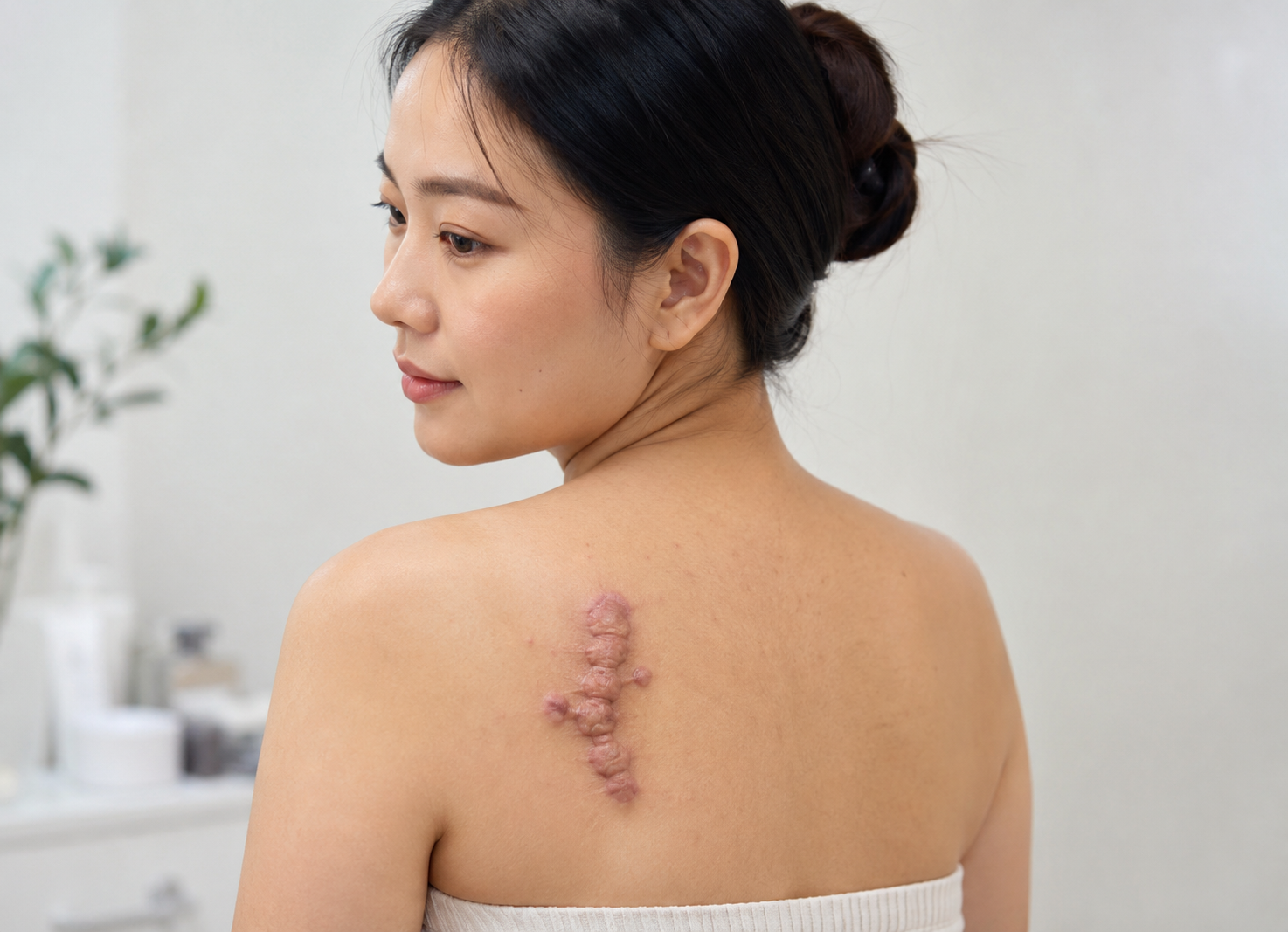
Raised, firm, rubbery scar tissue extending beyond the original wound or skin injury
Colour ranging from pink to red, brown, or darker than the surrounding skin
Itching, tenderness, or a burning sensation within the scar
Most commonly found on the earlobes (often following piercing), chest, shoulders, upper arms, and jawline
Can develop after surgery, burns, acne, piercings, vaccinations, or even minor trauma
In contrast to hypertrophic scars, keloids do not regress spontaneously
Causes & Triggers
Keloid formation results from an overactive wound healing response in which fibroblasts continue to produce excess collagen after the skin has healed. The precise reasons why this occurs in some individuals and not others are not fully understood, but risk factors include:
Skin tone – keloids are significantly more prevalent in individuals with darker skin tones
Genetic predisposition – a family history of keloids substantially increases risk
Wound location – certain body sites are more prone to keloid formation
Treatment at Skincodes
Keloid treatment requires a considered, staged approach. No single treatment is universally effective, and a combination of modalities often produces the best outcome.
Intralesional Corticosteroid Injections
A first-line treatment that suppress excessive collagen production, reduce inflammation, and gradually flatten the scar. A course of injections is typically required.
Silicone Therapy
Silicone sheets or gel applied consistently to the scar – can soften keloids over time and is useful as part of a maintenance programme.
Laser Treatment
Yellow light laser (585nm) reduces redness and vessel proliferation within the scar, while fractional laser can improve texture and pliability.
Surgical Excision
Considered in selected cases, and always combined with adjuvant treatment (typically post-operative steroid injections) to reduce recurrence risk.
Dr Ang will discuss realistic expectations clearly. Keloid management is a long-term process, and regular review supports consistent progress.
Why Choose Specialist Surgical Care
Dermatological surgery performed by a specialist offers distinct advantages:
- Accurate pre-surgical diagnosis with dermoscopy. Lesions are assessed carefully as appearances can be
misleading without specialist evaluation - Appropriate margin assessment for cancer excisions based on lesion type and guidelines
- Histological analysis of all removed tissue to confirm diagnosis and clear margins
- Minimally invasive techniques selected to optimise cosmetic outcomes
- Structured follow-up and surveillance for ongoing skin health