
Home > Conditions > Boils, Cysts & Styes
Boils, Cysts & Styes Treatment Singapore
Boils, Cysts & Styes Treatment Singapore
Boils, cysts, and styes are distinct conditions, but they share a common feature: a localised collection beneath the skin that requires appropriate assessment and, in many cases, clinical management. Attempting to manage these at home – particularly by squeezing or lancing – carries a real risk of spreading infection, driving the inflammation deeper, or introducing additional bacteria.
Signs & Symptoms
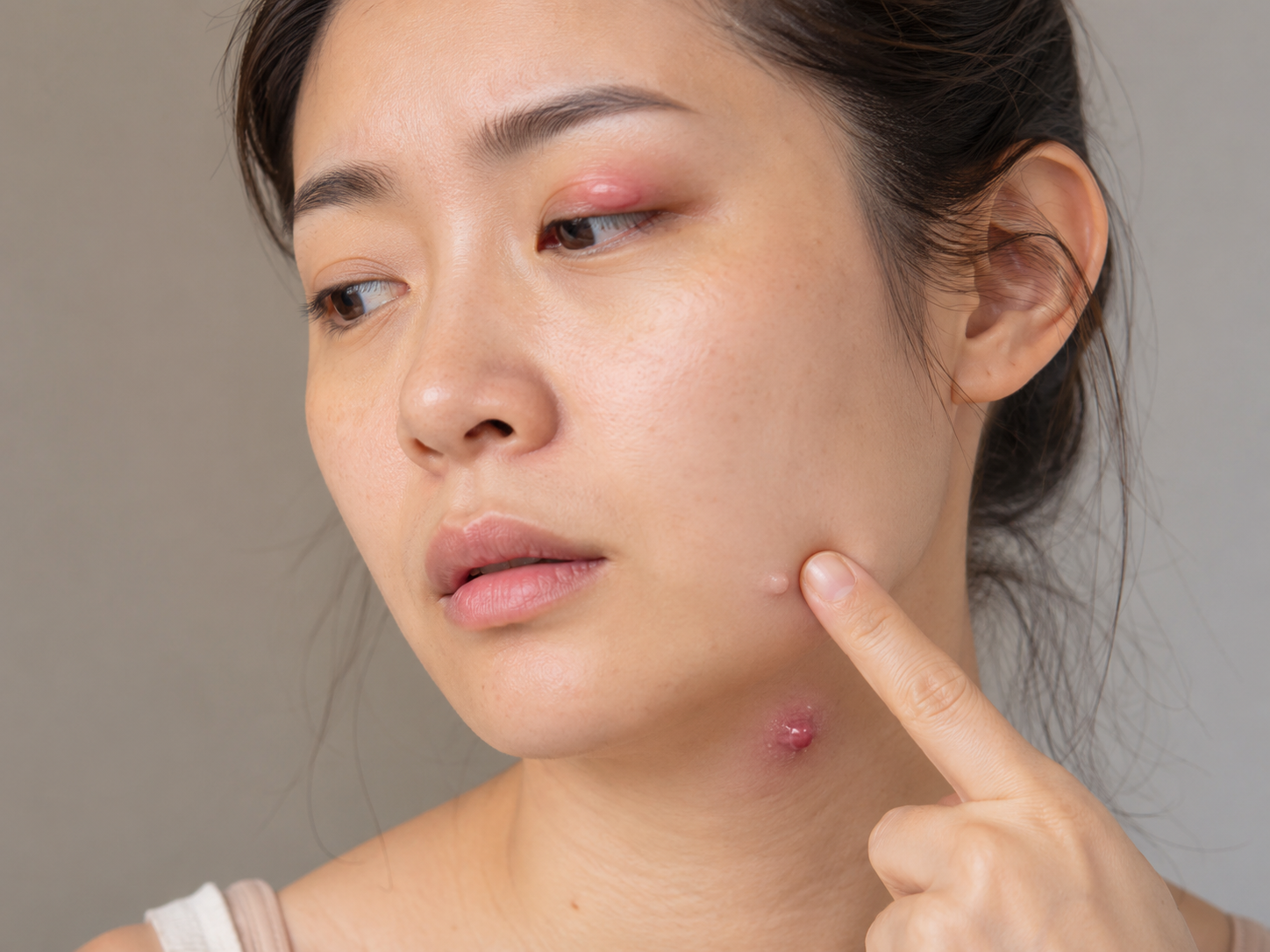
Boils (furuncles) are acute, painful bacterial infections originating in a hair follicle. They present as red, swollen, tender nodules that typically develop a central area of pus. Boils most commonly arise in areas prone to friction and sweating: the neck, face, buttocks, thighs, and armpits.
Sebaceous cysts are keratin-filled sacs that form beneath the skin. They are typically smooth, round, and slow-growing, with a characteristic central punctum. They can remain stable for years but may become inflamed or infected, causing sudden pain, swelling, and discharge.
Styes (hordeola) are acute bacterial infections of the eyelid margin, arising from the glands associated with the eyelash follicles. A chalazion is a related but distinct lesion – a blocked meibomian gland that forms a firm, non-infected nodule within the eyelid.
When to Seek Specialist Assessment
Consult a specialist if a boil or cyst is large, rapidly enlarging, or severely painful; recurs repeatedly; fails to resolve with initial management; is accompanied by fever or spreading redness; or is located on the face, around the eye, or near the spine. Recurrent boils may indicate an underlying condition affecting immune function or skin colonisation with resistant bacteria.


Treatment at Skincodes
At Skincodes, Dr Ang Sue-May assesses each lesion carefully to determine its nature and recommends the most appropriate treatment.
- Incision and drainage – for fluctuant boils or infected cysts, careful incision and drainage under local anaesthesia provides prompt relief and promotes healing.
- Topical and oral antibiotics – appropriate antibiotic therapy is prescribed where indicated, based on the clinical picture and, where relevant, swab results.
- Surgical excision – for sebaceous cysts that are recurrent, enlarging, or cosmetically bothersome, planned excision of the intact cyst wall under local anaesthesia prevents recurrence.
- Stye management – warm compresses, lid hygiene, and topical or oral antibiotics as appropriate. Persistent chalazia may require incision and curettage.
Why Choose Specialist Surgical Care
Dermatological surgery performed by a specialist offers distinct advantages:
- Accurate pre-surgical diagnosis with dermoscopy. Lesions are assessed carefully as appearances can be
misleading without specialist evaluation - Appropriate margin assessment for cancer excisions based on lesion type and guidelines
- Histological analysis of all removed tissue to confirm diagnosis and clear margins
- Minimally invasive techniques selected to optimise cosmetic outcomes
- Structured follow-up and surveillance for ongoing skin health