Home > Conditions > Freckles & Moles
Freckles & Moles Treatment Singapore
Freckles & Moles Treatment Singapore
Freckles and moles are among the most common skin features, yet they are frequently misunderstood. Whilst freckles are benign and purely cosmetic, moles require careful assessment as they can occasionally develop into melanoma, a serious form of skin cancer. Understanding the difference between these two types of pigmented lesions is essential for appropriate management.
Understanding Freckles vs Moles
Freckles (Ephelides)
Freckles are small, flat, light-brown spots that appear on sun-exposed skin, particularly in individuals with fair complexions. They are caused by an increase in melanin production in response to UV exposure but do not represent an increase in melanocyte numbers. Freckles are entirely benign and typically fade during periods of reduced sun exposure.
Moles (Melanocytic Naevi)
Moles are collections of melanocytes – the cells that produce pigment in the skin – clustered together. They can be flat or raised, vary in colour from pink to brown to black, and may be present from birth or develop throughout life. While most moles are harmless, changes in a mole’s appearance can be an early warning sign of melanoma.
Signs & Symptoms
Freckles – Small, flat, light-brown macules on sun-exposed areas (face, shoulders, arms)
Moles – Pigmented lesions that may be flat or raised, varying in size and colour
Changing moles – Any mole that changes in size, shape, colour, or begins to itch or bleed requires prompt assessment
Atypical moles – Irregular borders, multiple colours, or asymmetrical appearance
New moles appearing in adulthood – Whilst common in childhood and adolescence, new moles appearing after age 30 warrant evaluation
Causes & Contributing Factors
Genetic Factors
Both freckles and moles have strong genetic components. Individuals with fair skin, red or blonde hair, and light eyes are more prone to freckles. The number of moles a person develops is also significantly influenced by genetics.
UV Exposure
Sun exposure triggers freckle formation and can darken existing moles. Cumulative UV damage is a significant risk factor for melanoma development, particularly in individuals with multiple atypical moles.
Hormonal Changes
Moles may become more prominent or increase in number during pregnancy and adolescence due to hormonal influences.
When to Seek Assessment
The ABCDE criteria provide a useful framework for identifying moles that require professional evaluation:
A – Asymmetry: One half of the mole does not match the other
B – Border: Irregular, scalloped, or poorly defined edges
C – Colour: Multiple colours or uneven distribution of colour within the mole
D – Diameter: Larger than 6mm or growing in size
E – Evolution: Any change in size, shape, colour, or the development of symptoms such as itching, bleeding, or crusting
In Asian populations, melanoma more commonly develops on acral sites – the palms, soles, and under the nails – rather than sun-exposed areas. Any pigmented lesion in these locations should be assessed by a specialist.
Treatment at Skincodes
Dermoscopy Assessment
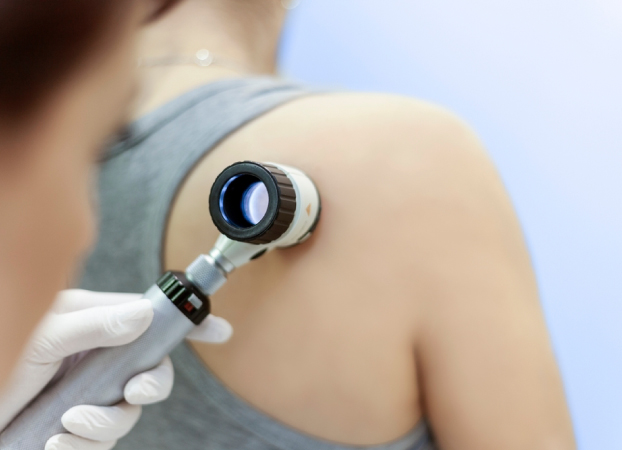
At Skincodes, Dr Ang Sue-May provides thorough evaluation of freckles and moles using dermoscopy, a specialised technique that allows detailed examination of skin structures beneath the surface. This enables accurate diagnosis and appropriate treatment planning.
Dr Ang uses dermoscopy to examine freckles and moles in detail, assessing features beneath the skin surface that are not visible to the naked eye. This non-invasive technique significantly improves diagnostic accuracy and helps distinguish benign lesions from those requiring further investigation.
Freckle Treatment
For individuals seeking to reduce the appearance of freckles, treatment options include:
Pico laser – Targeted laser energy to break down excess pigment
Chemical peels – To promote even skin tone and reduce superficial pigmentation
Prescription skincare – Including retinoids and pigment-regulating agents
Sun protection counselling – Essential for preventing new freckle formation and darkening of existing ones
Mole Management
Benign moles that cause cosmetic concern or physical discomfort can be safely removed:
Shave excision – For raised moles, carefully shaving the mole flush with surrounding skin
Surgical excision – For flat or suspicious moles, complete removal with histological analysis
Monitoring programme – For atypical moles, periodic dermoscopic photography to detect changes early
Every mole removed at Skincodes is sent for histological examination to confirm its benign nature and ensure complete removal.
Skin Cancer Screening
For patients with multiple moles, a personal or family history of melanoma, or significant sun exposure, Dr Ang offers structured skin surveillance programmes. Regular dermoscopic examination allows early detection of concerning changes.
Why Choose Specialist Surgical Care
Dermatological surgery performed by a specialist offers distinct advantages:
- Accurate pre-surgical diagnosis with dermoscopy. Lesions are assessed carefully as appearances can be
misleading without specialist evaluation - Appropriate margin assessment for cancer excisions based on lesion type and guidelines
- Histological analysis of all removed tissue to confirm diagnosis and clear margins
- Minimally invasive techniques selected to optimise cosmetic outcomes
- Structured follow-up and surveillance for ongoing skin health