Home > Conditions > Psoriasis
Psoriasis Treatment Singapore
Psoriasis Treatment Singapore
Psoriasis is a chronic autoimmune condition in which the immune system accelerates the skin cell turnover cycle, causing cells to accumulate on the surface far more rapidly than they can be shed. The result is the formation of raised, thickened plaques covered with silvery-white scale. Psoriasis follows a relapsing and remitting course for most patients, and its impact on quality of life – both physical and psychological – can be significant.
At Skincodes, Dr Ang Sue-May provides accurate diagnosis, identifies the subtype and severity of psoriasis, and develops an evidence-based treatment plan tailored to each patient.
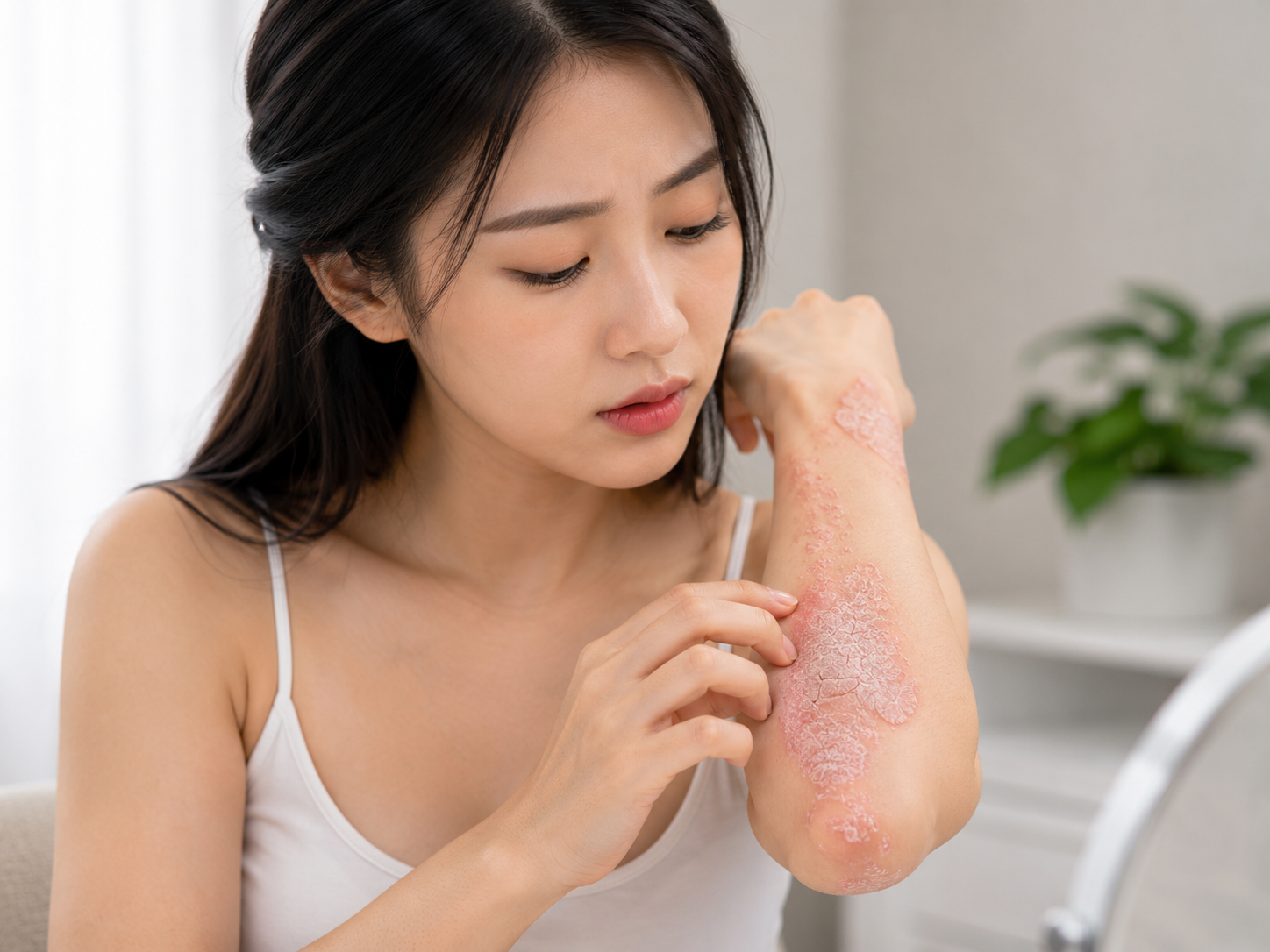
Signs & Symptoms
Raised, well-defined red or salmon-coloured plaques with silvery-white scale, most commonly on the elbows, knees, scalp, and lower back
Itching, burning, or soreness within affected areas
Nail changes – pitting, discolouration, separation from the nail bed (onycholysis)
Joint pain or swelling in patients with psoriatic arthritis
Psoriasis Subtypes
Plaque psoriasis – the most common form; well-defined scaly plaques
Guttate psoriasis – small, drop-shaped lesions, often triggered by streptococcal infection
Pustular psoriasis – sterile pustules on the palms and soles or more generalised
Erythrodermic psoriasis – a severe, widespread form requiring urgent assessment

Causes & Triggers
Psoriasis involves immune dysregulation with a strong genetic component – a family history of psoriasis is a significant risk factor. Environmental and lifestyle factors can trigger or worsen the condition:
Streptococcal throat infections
Streptococcal throat infections can trigger psoriasis, particularly guttate psoriasis, by activating immune responses that lead to the sudden onset or worsening of skin lesions.
Excessive alcohol consumption
Skin trauma (the Koebner phenomenon – psoriasis appearing at sites of injury)
[P] In Singapore, heat, humidity, and prolonged sweating can aggravate some patients, while others find sun exposure provides relief
Treatment at Skincodes
Psoriasis treatment is guided by disease severity, distribution, and the extent to which it affects daily function.
Topical Therapies
Corticosteroids, vitamin D analogues, and combination preparations – are appropriate for mild to moderate disease and remain the foundation of maintenance treatment.
Phototherapy
Controlled UV light treatment administered under specialist supervision – is effective for widespread or topical-resistant psoriasis.
Systemic Agents
Including methotrexate, acitretin, and cyclosporine – are considered for moderate to severe cases, with regular monitoring to ensure safety.
Biologics
Targeted therapies that address specific pathways in the immune response – represent an important advance for patients with severe, treatment-resistant psoriasis. Dr Ang can assess suitability and coordinate referral to an appropriate pathway where indicated.
Why Choose Specialist Surgical Care
Dermatological surgery performed by a specialist offers distinct advantages:
- Accurate pre-surgical diagnosis with dermoscopy. Lesions are assessed carefully as appearances can be
misleading without specialist evaluation - Appropriate margin assessment for cancer excisions based on lesion type and guidelines
- Histological analysis of all removed tissue to confirm diagnosis and clear margins
- Minimally invasive techniques selected to optimise cosmetic outcomes
- Structured follow-up and surveillance for ongoing skin health