Home > Conditions > Skin Tags
Skin Tag Removal Singapore
A skin tag is a small, soft growth that hangs from the skin on a narrow stalk. The medical name is acrochordon. They are harmless and never turn cancerous.
Most people want them removed because they catch on collars, necklaces or bra straps, or because of where they sit.
Dr Ang Sue-May checks each one first. Several other lesions look like skin tags, and confirming what it is before removing it means nothing gets treated that should have been investigated.
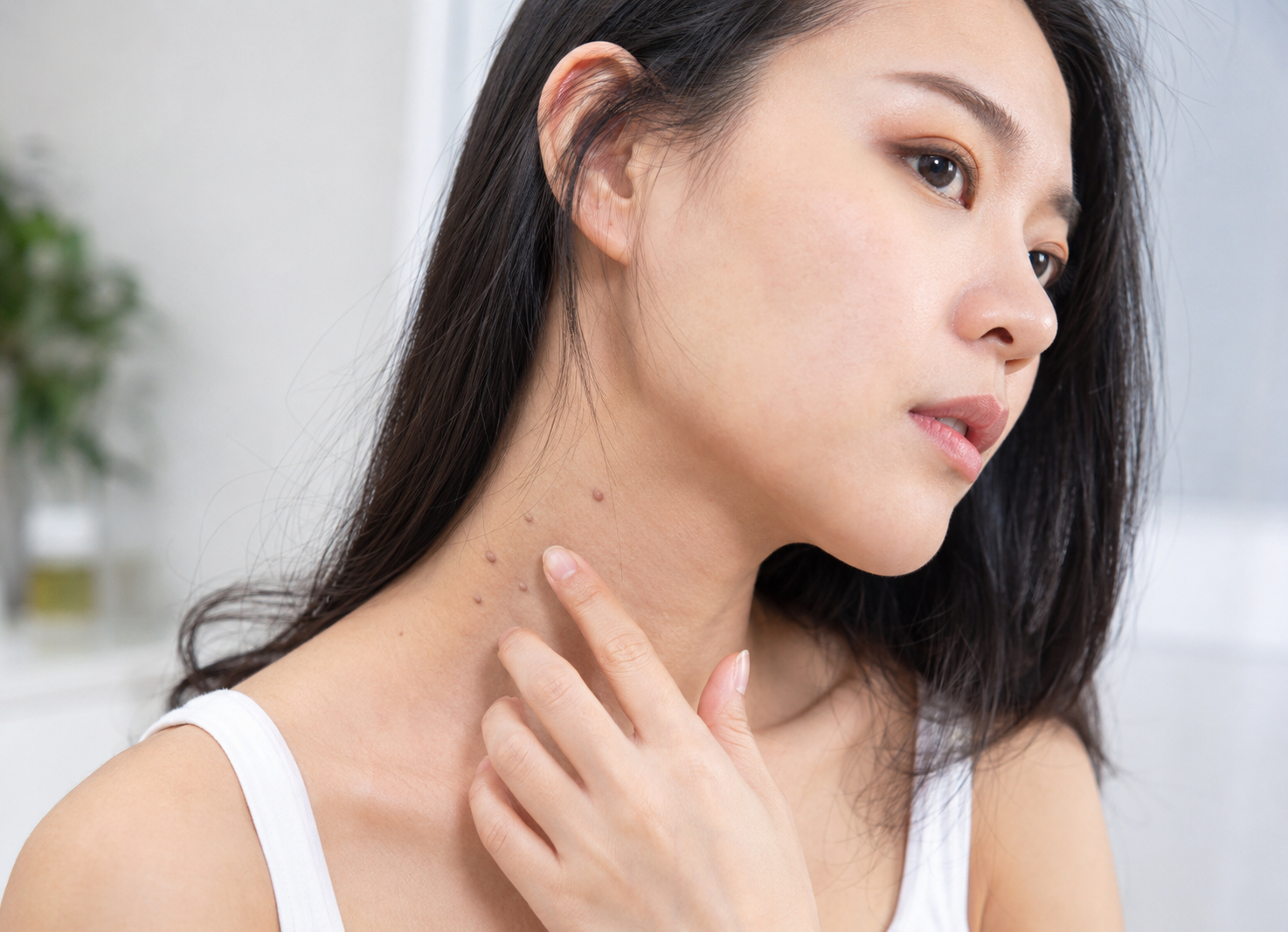
What a Skin Tag Looks Like
Small, soft, flesh-coloured growths attached to the skin by a thin stalk (peduncle)
Range in size from a few millimetres to over a centimetre
Most commonly found on the neck, armpits, groin, under the breasts, and around the eyelids
Generally painless unless subject to repeated friction or catching on clothing or accessories
May become darkened or irritated if the stalk becomes twisted
Causes & Triggers
The precise cause of skin tag formation is not fully established, but several factors are associated with their development:
Friction between skin surfaces or against clothing – which is why they are common in skin fold areas
Increasing age – skin tags become more prevalent from middle age onward
Metabolic factors including insulin resistance and obesity
Pregnancy – hormonal changes can promote skin tag formation
Genetic predisposition – some individuals are more prone to developing one or multiple skin tags, occasionally associated with underlying metabolic factors.

Treatment at Skincodes
Specialist assessment is an important first step, as raised skin lesions can have various causes. Accurate diagnosis avoids the risk of treating a lesion that warrants further investigation.
Once the benign nature of the lesion is confirmed, treatment options include:
Surgical Snip Excision
The stalk of the skin tag is carefully cut at its base under local anaesthesia. This is precise, effective, and produces immediate results.
Cryotherapy
The application of liquid nitrogen to freeze and destroy the skin tag over one or two sessions.
Cauterisation (Electrocautery)
Targeted heat is applied to remove the lesion and seal the surrounding tissue simultaneously.
The method selected depends on the size, location and number of lesions.
Aftercare and wound care guidance are provided following treatment.
What to Expect
Removal is done in clinic under local anaesthetic. Multiple tags can usually be dealt with in one visit.
The site heals over a week or two, depending on the size and where it was.
Removing a skin tag does not stop new ones forming elsewhere. People who get them tend to keep getting them, particularly in skin folds.

Related at Skincodes
Common Questions About Skin Tags
Are skin tags dangerous?
No. Skin tags are harmless and do not turn cancerous. The reason to have one checked is that several other lesions look similar, and a few of those do need investigating.
Can I remove a skin tag myself?
Home kits and tying threads remove the visible part and leave the base behind, which is how they grow back and how the site gets infected. Anywhere near the eyelid should never be done at home.
What is the difference between a skin tag and a mole?
A skin tag is soft, flesh-coloured and hangs on a narrow stalk. A mole is usually flat or slightly raised, pigmented, and sits flush against the skin. Moles need monitoring for change. Skin tags do not.
Will they come back?
The one that is removed does not. New ones can form elsewhere, particularly in skin folds and if the underlying tendency is still there.
Does removal hurt?
Local anaesthetic is used, so the removal itself is not painful. There may be mild tenderness for a day or two afterwards.
Why do I keep getting them on my neck?
Friction. The neck, armpits, groin and under the breasts are where skin rubs against skin or clothing, which is why tags cluster there.
Start Your Consultation Today
Seeking specialist dermatology care with clear guidance and a treatment plan built around your skin?
Our team is here to support you.