Home > Conditions > Hair Loss
Hair loss treatment singapore
Hair loss treatment singapore
Hair Loss Treatment in Women and Men
Hair loss is a condition that affects far more people than commonly acknowledged – and for many, it carries a significant emotional weight that extends well beyond the physical change itself. Whether you are noticing a gradually widening parting, increased shedding on your pillow or in the shower, or a visible reduction in hair density, a specialist assessment is the most important first step toward understanding what is happening and what can be done.
Types of Hair Loss
Hair loss encompasses several distinct conditions. Understanding the underlying pattern and mechanism is essential to selecting treatment that will actually be effective.
Androgenetic Alopecia
The most common form of hair loss in both men and women. In men, it typically presents as a receding hairline and thinning at the crown. In women – where it is often referred to as female pattern hair loss – the presentation is more diffuse, characterised by thinning across the top and crown of the scalp with relative preservation of the frontal hairline.
The process is driven by a genetic sensitivity of hair follicles to dihydrotestosterone (DHT), which causes follicles to miniaturise progressively over time.
Telogen Effluvium
A diffuse, temporary form of shedding triggered by a physiological or psychological stressor that pushes a large proportion of hairs into the resting (telogen) phase simultaneously. It commonly follows childbirth, illness, surgery, rapid weight loss, nutritional deficiency, or a period of significant emotional stress – and typically manifests two to three months after the triggering event.
In Singapore, where demanding professional and personal schedules are common, telogen effluvium is a frequently encountered presentation.
Traction Alopecia
Develops gradually as a result of chronic mechanical tension on the hair follicles – from tight braids, ponytails, extensions, or similar hairstyling practices. It most commonly affects the hairline and temples and, if caught early, is largely reversible with changes to hairstyling habits and appropriate medical support.
Signs & Symptoms
Diffuse thinning across the top of the scalp, particularly noticeable under direct light
A widening parting or reduced density at the crown
Increased daily shedding – on the pillow, in the shower, or when brushing
A receding or progressively thinning hairline in men
Hair that feels finer or more fragile than previously
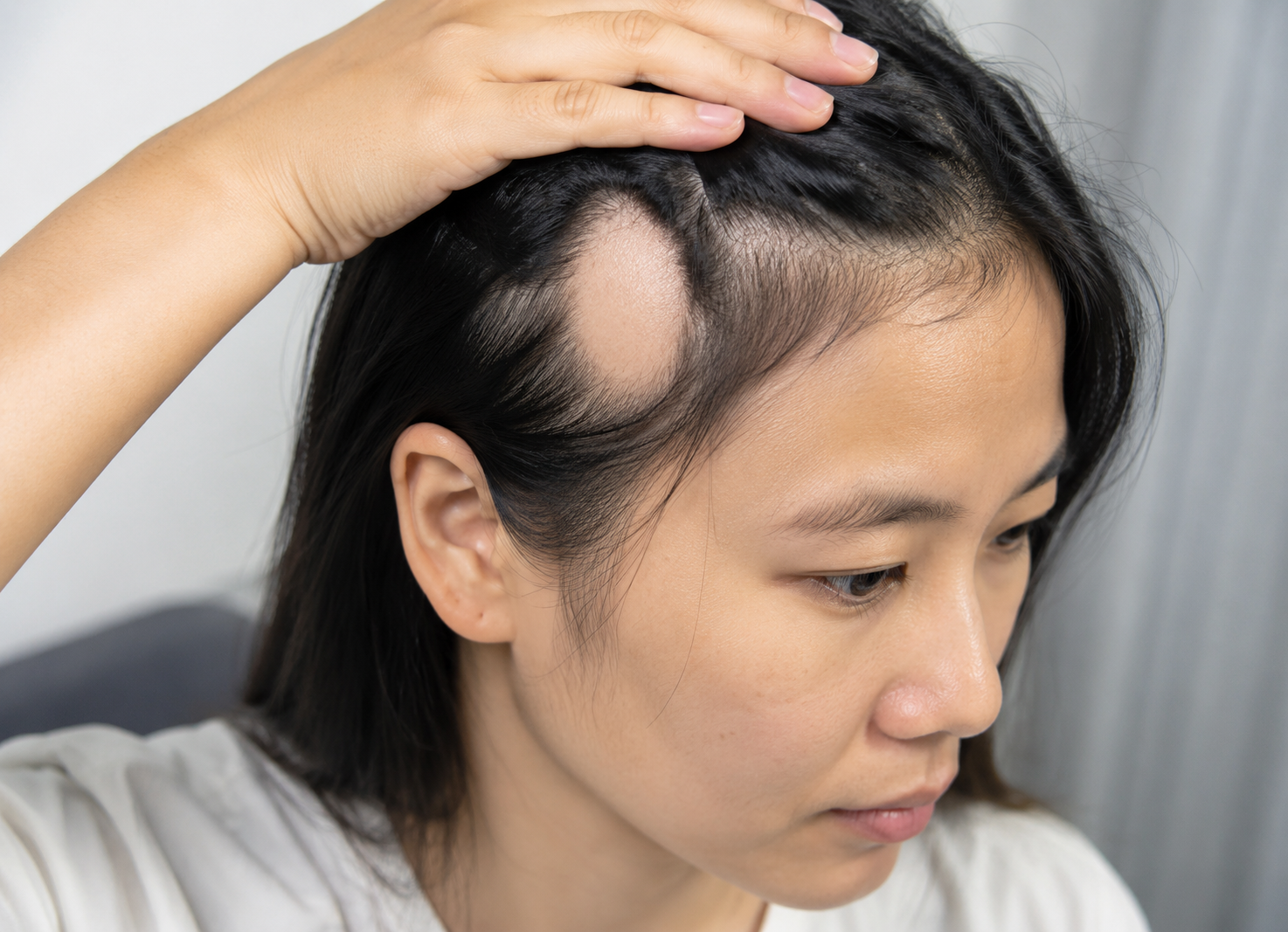
Patchy hair loss (which may suggest a different underlying condition)
Causes & Contributing Factors
Hormonal Changes
Fluctuations in androgen levels, thyroid function, or oestrogen – particularly around pregnancy, the postpartum period, perimenopause, or with hormonal contraceptive changes – frequently contribute to hair loss in women.
Nutritional Deficiency
Deficiencies in iron (including low ferritin without frank anaemia), vitamin D, zinc, and certain B vitamins have been associated with increased shedding and reduced hair quality. Bloodwork is often a useful part of the initial assessment.
Stress
Both acute and chronic psychological stress can precipitate or perpetuate telogen effluvium, and may also exacerbate androgenetic alopecia.
Genetics
A family history of hair loss – in either parent – significantly increases the likelihood of androgenetic alopecia.
Underlying Medical Conditions
Thyroid disorders, polycystic ovarian syndrome, autoimmune conditions, and scalp inflammation can all contribute to hair loss and require assessment and management in their own right.
Treatment at Skincodes
At Skincodes, we assess hair loss systematically and manage it with the same clinical rigour applied to any other dermatological condition. Dr Ang Sue-May provides thorough diagnosis and individualised treatment for all types of hair loss.
Effective hair loss management begins with a thorough consultation, including an assessment of the scalp and hair pattern, relevant history, and – where indicated – blood investigations to identify contributing factors. Dr Ang tailors each treatment plan to the individual’s hair loss type, severity, and goals.
Medical Treatments
Form the foundation of most hair loss management plans. Depending on the diagnosis, these may include topical minoxidil, prescription oral medications including those targeting DHT or hormonal drivers, and supplements targeted to any identified deficiencies.
Low-Level Laser Therapy (LLLT)
Uses specific wavelengths of light to stimulate follicular activity and improve the density and quality of existing hair. It is a well-tolerated, non-invasive treatment that can be used alongside medical therapy to support response.
Scalp Injections (Corticosteroids)
Direct injection of anti-inflammatory agents into affected patches. Highly effective first-line treatment for localised alopecia areata, reducing inflammation and allowing follicles to re-enter the growth cycle.
Microneedling with Hair Serums
Creates microscopic channels in the scalp, enhancing absorption of topical growth factors or minoxidil. The controlled wound-healing response stimulates natural growth factor production and improves scalp circulation.
Exosome Scalp Therapy
Nanoscale vesicles released by stem cells, packed with powerful growth factors, mRNA, and signalling molecules. Applied directly to the scalp (often via microneedling) to signal damaged follicles to regenerate, repair, and enter the growth phase. Indicated for select patients with androgenetic alopecia and telogen effluvium seeking cutting-edge non-surgical solutions.
In-Clinic Treatments
Nutritional supplements and scalp treatments may be incorporated where nutritional factors or scalp health are contributing to the hair loss presentation.
AnteAGE MD Hair Growth Factor
An advanced regenerative treatment that harnesses bioactive growth factors and cytokines to revitalise dormant hair follicles and support the anagen (growth) phase. The concentrated solution is delivered directly to the scalp, creating an optimal environment for follicular repair and regeneration. Suitable for patients with androgenetic alopecia or diffuse thinning, either as a standalone therapy or in combination with other treatments.
What to Expect
Treatment for hair loss requires patience and consistency. Dr Ang will guide you through what to expect at each stage and adjust your plan based on your progress over time.
Treatment is staged and reviewed regularly, as hair loss management often requires sustained effort over several months before meaningful improvement becomes visible. Both male and female hair loss are treated with equal attention, with protocols adapted to the specific pattern and cause.
Why Choose Specialist Surgical Care
Dermatological surgery performed by a specialist offers distinct advantages:
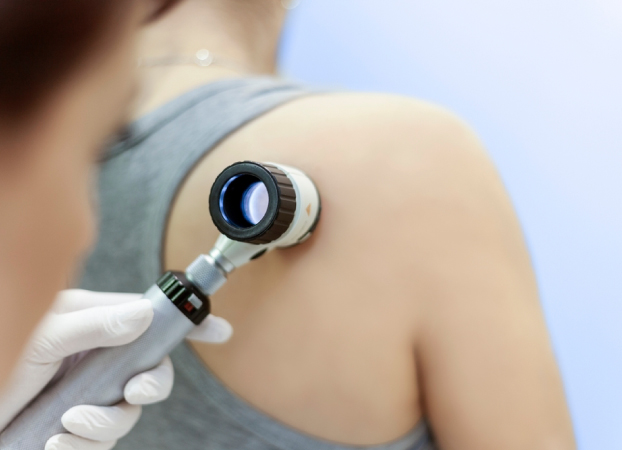
- Accurate pre-surgical diagnosis with dermoscopy. Lesions are assessed carefully as appearances can be
misleading without specialist evaluation - Appropriate margin assessment for cancer excisions based on lesion type and guidelines
- Histological analysis of all removed tissue to confirm diagnosis and clear margins
- Minimally invasive techniques selected to optimise cosmetic outcomes
- Structured follow-up and surveillance for ongoing skin health