Home > Conditions > Wart Removal
Wart Removal Singapore
Warts are harmless skin growths caused by HPV. They spread, they multiply, and they rarely clear on their own.
Most people come here after pharmacy treatments have failed, or after a wart has come back. Clearing them depends on matching the treatment to the wart type and site, and on treating every wart present rather than only the obvious one.
Dr Ang Sue-May assesses the type and extent, then treats accordingly.
Which Type of Wart Do You Have?
Type and location decide the treatment.
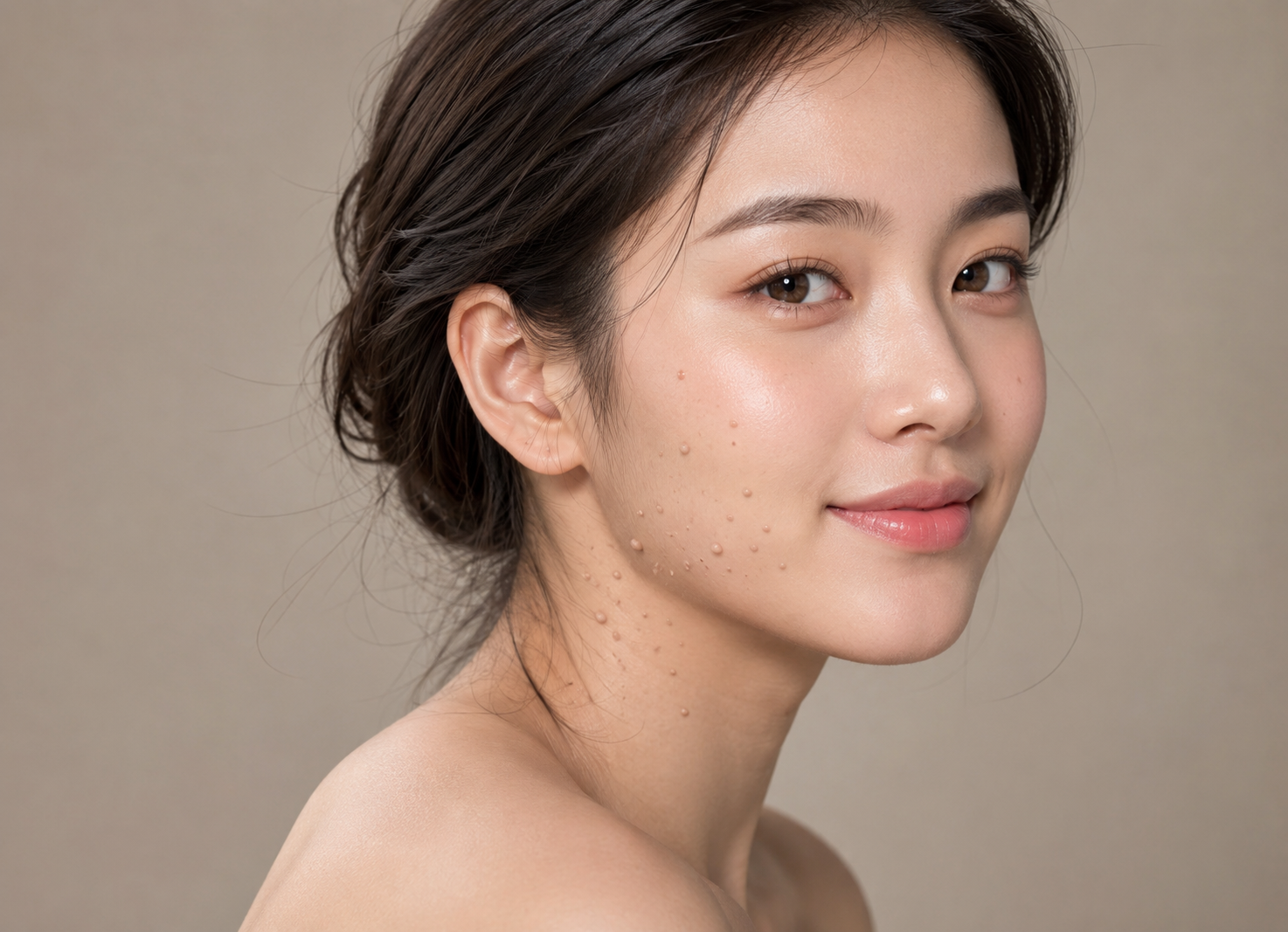
Common warts (verruca vulgaris)
Rough, raised growths, most often on the hands and fingers.
Plantar warts (verrucae)
On the soles of the feet. Often painful under pressure, with a dark central core. Harder to clear because of the thick skin over them.
Flat warts
Small, smooth and flat-topped. More common in children, often across the face, and easily spread by shaving.
Filiform warts
Thread-like projections around the nose, lips or eyelids. Facial sites need a gentler method to avoid marking the skin.
Periungual warts
Around or under the fingernails and toenails. The most stubborn type, and the most likely to need several sessions.
Causes & Triggers
Warts are caused by HPV, of which there are many strains. Transmission occurs through direct contact with the virus, either from another person or from a contaminated surface such as swimming pool floors or changing room areas. The virus enters the skin through small cuts or abrasions.
Risk is increased by:
Shared communal spaces
Pools, changing rooms and sports facilities. Common in Singapore’s school and sports environments.
Weakened immune function
Clearing the virus depends on your immune response, so warts are more persistent where that is reduced.
Broken skin
Nail biting and skin picking create entry points for the virus.
Walking barefoot in public spaces
The most common route to plantar warts.
Children and young adults are affected most often,
though warts can develop at any age.
Treatment at Skincodes
Warts often persist without intervention, and delaying treatment increases the risk of spread to other sites or to close contacts. Treatment choice depends on wart type, location, size, and prior treatment history.
No single treatment clears every wart. Cryotherapy suits common warts on the hands. Plantar warts usually need the thick skin pared back first. Facial warts need a gentler method to avoid scarring. Periungual warts are the most stubborn and often need more than one approach.
Cryotherapy
Liquid nitrogen is applied to freeze the wart, causing the infected skin cells to break down over a series of sessions. This is well-tolerated and suitable for most wart types.
Topical Agents
Preparations containing salicylic acid or other keratolytic agents may be used as part of a structured treatment programme.
Laser Treatment
CO2 laser can be used for resistant warts or those in difficult anatomical locations.
Surgical Removal
Excision or curettage is considered for warts that have not responded to other approaches.
Some warts require multiple treatment sessions. Dr Ang monitors response over time and adjusts the approach as needed.
Some warts require multiple treatment sessions.
Dr Ang monitors response over time and adjusts the approach as needed.
How Many Sessions, and What Affects Clearance
Sessions
Most warts need more than one treatment, spaced two to three weeks apart. Warts on the hands generally clear faster than plantar and periungual warts.
What makes clearance harder
Warts present for more than a year. Plantar and periungual sites, where the skin is thick or the nail is involved. Multiple warts, where the untreated ones reseed the treated area. Reduced immune function, including from medication.
Why warts come back
Treatment removes the growth. Clearing the virus depends on your own immune response. Recurrence usually means a wart was missed, or the virus was still in the surrounding skin. That is why every wart gets treated, not only the visible one.
Related at Skincodes
Common Questions About Warts
Will a wart go away on its own?
Some do, over months or years, once the immune system clears the virus. Many do not, and warts left alone often multiply or spread. Treatment shortens it and lowers the chance of passing it to someone else.
Why do warts keep coming back?
Treatment removes the growth but not always the virus in the skin around it. Recurrence usually means a wart was missed, or virus remained nearby. Treating every wart present is what reduces the chance of return.
Are warts contagious?
Yes. HPV spreads through direct skin contact and through contaminated surfaces such as pool floors and changing rooms. It gets in through small cuts, which is why barefoot communal areas are a common source.
Can I treat a wart on my face at home?
Over-the-counter wart treatments are not made for facial skin and can leave marks or scarring. Facial and filiform warts need a gentler clinical approach.
How many sessions does it take?
Most warts need more than one, spaced two to three weeks apart. Plantar and periungual warts take longer because of the thick skin or nail involvement.
What is the difference between a wart and a skin tag?
A wart is a viral infection with a rough surface, often with dark pinpoints in it. A skin tag is soft and smooth on a narrow stalk. It is not viral and not contagious. They are treated differently.
Start Your Consultation Today
Seeking specialist dermatology care with clear guidance and a treatment plan built around your skin?
Our team is here to support you.