Can laser make pigmentation worse? It can, and melasma is where it happens most often. A laser that is wrong for the pigment, or right but set too strongly, can leave skin darker or blotchier than before treatment. This blog will walk you through why lasers backfire on melasma and how a dermatologist plans treatment so they don’t.
How laser makes pigmentation worse
Laser worsens pigmentation in three recognisable ways. Each has a different cause and a different outlook, and the fix for one can aggravate another, so it helps to know which you are dealing with.
Post-inflammatory hyperpigmentation (PIH)
PIH is new brown pigment laid down after skin is inflamed or injured. Laser heat counts as an injury, and skin with active melanocytes tends to answer it by producing more melanin. You can read more about hyperpigmentation that follows inflammation and how it differs from other brown marks.
PIH is not limited to melasma. In a split-face trial of Asian patients in Taiwan, published in the Journal of the American Academy of Dermatology in 2006, a Q-switched alexandrite laser used on lentigines (sunspots) caused PIH in 8 of 17 patients, while the intense pulsed light side of the same faces developed none. PIH usually fades over several months with strict sun protection, although it can last longer in darker skin.
Rebound melasma
Rebound is melasma that returns darker or wider once laser treatment stops. A 2010 study from Ramathibodi Hospital in Bangkok shows the pattern clearly. Twenty-two Thai patients with dermal or mixed melasma had five weekly sessions of low-fluence Q-switched Nd:YAG laser plus a lightening cream on one side of the face, and the cream alone on the other. The laser side lightened far more at first. During follow-up, four patients developed rebound darkening, three developed mottled pale patches, and melasma came back in every patient. The authors concluded the improvement was only temporary.
Mottled hypopigmentation after laser toning
Laser toning means repeated low-energy passes of a Q-switched 1064 nm laser, often weekly. It became popular across Asia for melasma and general skin brightening. Its best-documented complication is mottled depigmentation, where pale, confetti-like spots appear among the brown.
A case series from the University of Hong Kong described 14 Chinese women who developed it after between 6 and 50 toning sessions. Five of them had been treated for melasma, and toning had not improved the melasma in any of the five. The authors noted the pale spots could appear after only a few sessions. These spots are often described online as permanent, but the same series is more encouraging: five patients treated with targeted narrowband UVB phototherapy responded well.
Why melasma reacts badly to laser energy
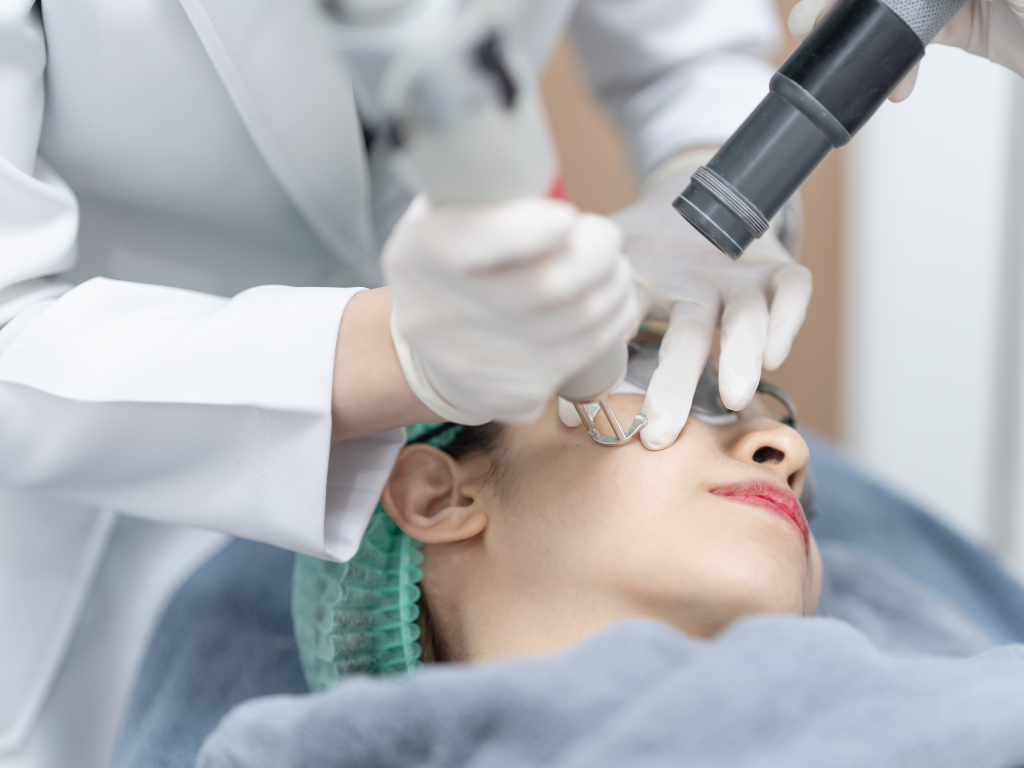
Melasma is a chronic pigment disorder in which melanocytes are already overactive, driven by sun exposure and hormonal factors. It mostly affects adult women with Fitzpatrick skin types III to V. Because those melanocytes are easily provoked, the heat and inflammation a laser creates can push them to make more pigment instead of less.
Selective photothermolysis and where it fails in melasma
Pigment lasers rely on selective photothermolysis. A wavelength that melanin absorbs heats and fragments the pigment, and the body clears the debris. On a stable sunspot, that process works cleanly.
Melasma is less forgiving. The Indian Pigmentary Expert Group, in its 2017 consensus on lasers in melasma, links the adverse effects of lasers to damage at the base of the epidermis and inflammation in the dermis. That combination explains why the same session can lead to recurrence with sun exposure, PIH, rebound darkening or mottled depigmentation.
Epidermal, dermal and mixed melasma
Depth changes the plan. Epidermal melasma sits in the top layer of skin and tends to respond better to topical treatment. Dermal melasma lies deeper, where creams reach less easily, and mixed melasma has both components. A dermatologist estimates depth with a Wood’s lamp, dermoscopy or both, and depth is one reason a laser can behave differently on two people with what looks like the same pigmentation. If you are unsure what you have, our guide to the types of facial pigmentation explains how melasma, sunspots and PIH look different.
Which lasers carry the most risk for pigmentation
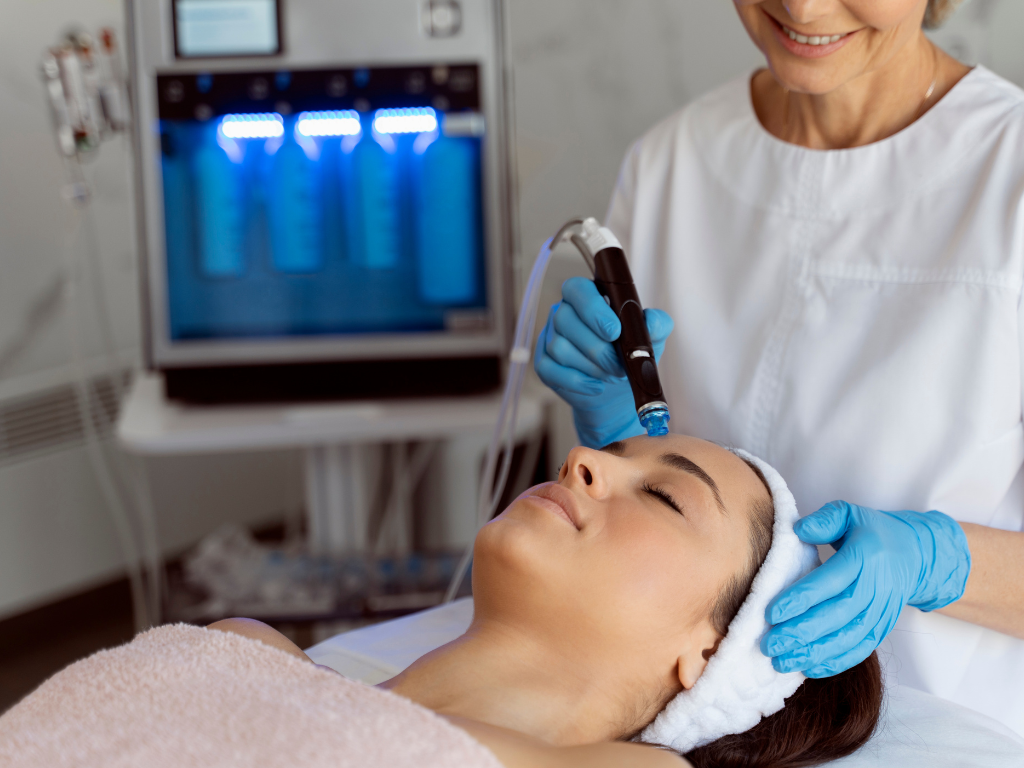
No laser is safe or unsafe for pigmentation in the abstract. Risk depends on the device and how it is set, measured against the pigment it meets.
| Device | What the evidence shows in melasma | Main risk in darker skin |
| Q-switched Nd:YAG 1064 nm, including laser toning | Fast lightening, then recurrence in all 22 patients in a Thai trial. The Indian Pigmentary Expert Group still rates low-fluence use as the best laser option for resistant melasma in darker skin, never as monotherapy | Rebound darkening; mottled depigmentation with repeated sessions |
| Intense pulsed light (IPL) | Response described as unpredictable, with frequent recurrence (Indian Pigmentary Expert Group, 2017) | Broad-spectrum light is also absorbed by surface melanin |
| Picosecond lasers | Mixed. One trial found benefit when added to a lightening cream; another found no extra benefit over Q-switched Nd:YAG and recurrence or worsening in 10 of 17 patients at two years | Less heat per pulse, but recurrence remains common |
| Non-ablative fractional 1550 nm | FDA-cleared for melasma since 2005. At 15 mJ per microbeam, 31% of 29 patients developed PIH; another trial at different settings found it comparable to topical therapy | PIH at higher energy |
| Ablative lasers (CO2, Er:YAG) | Not recommended for melasma because of side effects and relapse (2024 review) | Higher complication rates in skin of colour |
Laser toning and Q-switched Nd:YAG
Low-fluence Q-switched Nd:YAG is not a rogue device. The Indian Pigmentary Expert Group considers it the best laser option for resistant melasma in darker skin, on one firm condition: it should not be used on its own. Problems start when toning becomes the whole treatment, repeated week after week with no topical therapy and no end point. The Hong Kong case series above shows where that can lead.
Intense pulsed light
IPL is not a laser. It is a flashlamp that emits a broad band of wavelengths, which suits sunspots and facial redness better than melasma. In the Taiwanese trial mentioned earlier, IPL caused no PIH on freckles and sunspots in Asian patients, which shows how gentle it can be on the right target. On melasma, the Indian consensus describes responses to IPL as unpredictable, with pigment that frequently returns.
Picosecond lasers and pico laser side effects
Picosecond lasers deliver energy in pulses lasting trillionths of a second, breaking pigment more through pressure waves than heat. Less heat should mean less inflammation, which is why pico lasers are often promoted as gentler for melasma. The trials are more mixed than the marketing.
In a Thai study of 30 women, a fractional 1064 nm picosecond laser added to a lightening cream improved melasma more than the cream alone at 12 weeks, with only mild, short-lived redness and flaking. In a Chinese split-face trial published in 2024, a 755 nm picosecond laser gave no extra benefit over Q-switched Nd:YAG, and 10 of 17 patients reported recurrence or worsening at two years. Short-term side effects in both trials were mild. The bigger issue for melasma was that pigment came back, and a laser alone does not stop that.
At Skincodes, pigmentation is treated with a Pico Laser (Deka Toro), which combines a 785 nm picosecond wavelength with 1064 nm and 532 nm nanosecond wavelengths, used within a diagnosis-led plan rather than as a stand-alone course.
What FDA clearance does and does not tell you
The 1550 nm non-ablative fractional laser has held US FDA clearance for melasma since 2005, and it is often described as the only laser cleared for that use. Two trials from the Netherlands Institute for Pigment Disorders show why clearance is not the same as safety for every face. In a split-face study of 29 patients published in 2010, the laser at 15 mJ per microbeam caused PIH in nine patients (31%), and the authors concluded it was not recommendable for melasma at that setting. A pilot trial of 20 patients published in 2011 found the same wavelength, at the settings used in that study, comparable to topical therapy in both results and recurrence.
Clearance describes what a device may be marketed for. It says nothing about the energy your skin receives on the day.
Why darker and Asian skin carries more laser risk
The more melanin sits in the upper skin, the more laser energy it absorbs before reaching the pigment being treated. A 2026 review in the Journal of the American Academy of Dermatology describes epidermal melanin in Fitzpatrick types IV to VI as a competing chromophore, meaning it soaks up energy aimed at the target and raises the risk of PIH, hypopigmentation, blistering and scarring. The review favours low-fluence Q-switched and picosecond Nd:YAG lasers for pigment problems in darker skin, and warns that ablative devices carry higher complication rates.
Asian skin generally falls within types III to V. Ho and Chan, in a 2009 review of pigmentary disorders in Asian patients, called PIH after skin injury a hallmark of skin of colour.
Laser safety by Fitzpatrick skin type
Fitzpatrick skin type classifies skin by how it reacts to sun, not by ethnicity, so two people from the same background can sit in different types. The table below summarises how the risk of worsening pigmentation shifts across the six types. It is general risk context, not a treatment protocol. Settings are decided at an in-person assessment.
| Fitzpatrick type | Sun reaction | Risk of worsening pigmentation after laser | What a careful plan involves |
| I | Always burns, never tans | Lowest risk of laser-induced PIH | Standard pigment settings and sun protection after treatment |
| II | Usually burns, tans minimally | Low | Standard pigment settings and sun protection after treatment |
| III | Sometimes burns, tans gradually | Moderate. PIH becomes a realistic risk, and this is where melasma commonly begins | Confirm the pigment type first; test treatment if melasma is present |
| IV | Rarely burns, tans easily | High. Surface melanin competes for laser energy, so PIH and rebound are more likely at higher energy | Sequential low-energy sessions, topical therapy alongside, strict UV and visible light protection |
| V | Very rarely burns, tans darkly | High. Hypopigmentation, blistering and PIH are more likely | 1064 nm devices at low energy in selected cases; avoid ablative lasers |
| VI | Never burns | Highest | The most conservative approach, with laser used only where benefit clearly outweighs risk |
How Singapore’s sun raises the stakes after treatment
Treated skin in Singapore goes straight back into strong sun. The National Environment Agency puts the typical daily maximum UV index at 6 to 9, highest between 11am and 3pm, with peak readings usually in February, March, April and September.
UV is not the only trigger. In a 2014 randomised trial of 68 melasma patients in Mexico, all using the same lightening cream, an SPF 50 sunscreen containing iron oxide, which blocks visible light, improved melasma severity scores by 15% more than a UV-only sunscreen over eight weeks. That is why tinted sunscreen with iron oxides is part of aftercare for melasma, not an optional extra.
Where laser fits in treating melasma
Laser is an add-on for melasma, not the first step. The Indian Pigmentary Expert Group consensus states that laser cannot be first-line treatment and should be reserved for selected patients with resistant melasma, after thorough counselling and preferably a test treatment. A 2024 review of melasma management in the Journal of Clinical Medicine takes a similar position: topical lightening agents come first, energy devices are kept for refractory or recurrent cases, and using devices alone can worsen melasma and cause rebound after treatment stops.
Recurrence is the reason for that caution. Melasma is managed rather than cured. In a trial across 16 centres in Brazil and Mexico, 242 patients who had cleared or nearly cleared with a prescription combination cream moved onto maintenance treatment, and only 53% were still relapse-free six months later. Any laser plan has to sit inside that long-term picture, and specialist melasma treatment in Singapore is planned around it, with sun protection and maintenance continuing after the last session.
What a dermatologist checks before any laser
A careful assessment before laser covers five points:
- The pigment type, since melasma, sunspots, freckles and PIH can sit on the same face and need different handling
- The depth of the pigment, using a Wood’s lamp or dermoscopy
- Your skin type and any history of darkening after acne, injuries or previous procedures
- Whether topical treatment and daily UV and visible light protection have been used properly first
- A small test treatment in a discreet area before the whole face, when laser is being considered for melasma
When laser does go ahead, settings start low and are raised only if the skin tolerates them.
How Skincodes approaches laser for pigmentation
Dr Ang Sue-May is a member of the American Society for Laser Medicine and Surgery, and she classifies pigmentation before recommending treatment, using a Wood’s lamp examination where appropriate. Options for pigmentation treatment in Singapore at the clinic include the Pico Laser (Deka Toro) and a 585 nm yellow light laser for vascular components that contribute to uneven tone, each matched to the diagnosed pigment type.
If laser has already made your pigmentation worse
Stop further sessions and have the skin assessed before anything else is done to it. The next step depends on which reaction you have.
- Darker patches in the treated area are usually PIH or rebound melasma. Both are managed with strict UV and visible light protection and dermatologist-directed topical treatment. PIH generally fades over months; rebound melasma needs ongoing melasma management.
- Pale or white spots after repeated toning are mottled depigmentation. They need a diagnosis, and some cases respond to phototherapy, as the Hong Kong series found with targeted narrowband UVB.
Bring whatever you know about the treatment to your appointment: the device name if you have it, the number of sessions and the dates. It helps the dermatologist work out what your skin was exposed to.
Conclusion
Laser does not make pigmentation worse at random. It happens when laser energy meets reactive pigment that was never properly diagnosed, in skin that absorbs more of that energy than expected. A confirmed diagnosis and a test treatment before full sessions change those odds.
If you are weighing laser for pigmentation, or a past treatment left your skin darker, book a pigmentation assessment with Dr Ang Sue-May to confirm the pigment type before any device is used.
Frequently asked questions
Does IPL make melasma worse?
It can. IPL is a broad-spectrum flashlamp, and in darker skin its light is absorbed by surface melanin as well as the target pigment, which raises the risk of PIH. The Indian Pigmentary Expert Group describes IPL responses in melasma as unpredictable, with frequent recurrence. IPL generally suits sunspots and facial redness better than melasma.
Is pico laser safe for melasma?
Picosecond lasers produce less heat than older pigment lasers, but they are not risk-free for melasma. One trial found a fractional 1064 nm pico laser plus cream beat cream alone at 12 weeks; another reported recurrence or worsening in 10 of 17 patients at two years. Pico belongs inside a plan with topical treatment and sun protection.
How long does pigmentation from laser take to fade?
PIH after laser usually fades over several months with strict sun protection and topical treatment, and it can last longer in darker skin. Rebound melasma needs ongoing melasma management rather than waiting it out. Pale spots from over-treatment recover more slowly and may need phototherapy.
Are white spots from laser toning permanent?
Not always. Mottled depigmentation after repeated low-energy Q-switched laser is often called permanent, but in a University of Hong Kong case series of 14 patients, five treated with targeted narrowband UVB phototherapy responded well. The first steps are stopping further toning and getting a dermatologist’s assessment.
Can pigmentation come back after laser?
Yes, particularly melasma. In a Thai trial of 22 patients, melasma returned in every patient after a course of low-fluence Q-switched Nd:YAG laser. Even with maintenance creams, only 53% of patients in a 242-patient trial stayed relapse-free at six months. Sun protection and maintenance treatment need to continue after laser ends.
Which skin types are most at risk of pigmentation after laser?
Fitzpatrick types IV to VI carry the highest risk, because melanin in the upper skin absorbs laser energy and can react with PIH or pale patches. Asian skin generally falls within types III to V, so conservative settings and a test treatment matter for many patients in Singapore.
What should I do if laser made my pigmentation worse?
Stop further laser sessions and see a dermatologist to confirm whether the change is PIH, rebound melasma or depigmentation, since each is managed differently. Protect the area daily with a tinted sunscreen containing iron oxides, and bring details of the device and number of sessions to your appointment.