Home > Conditions > Excessive Sweating
Excessive Sweating (Hyperhidrosis) Treatment Singapore
Excessive Sweating (Hyperhidrosis) Treatment Singapore
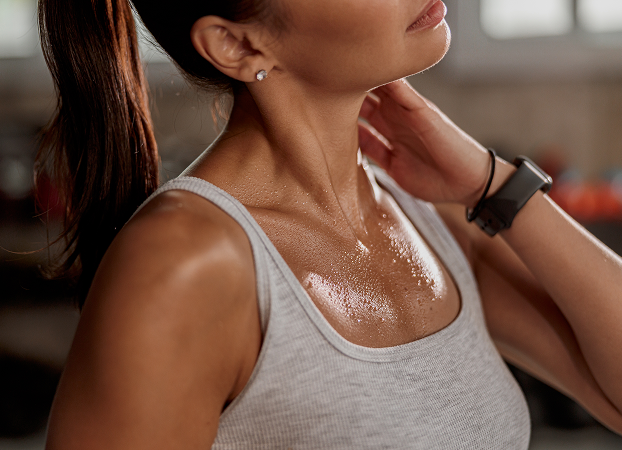
Sweating is a normal physiological function, but for those with hyperhidrosis, sweating occurs in amounts that far exceed what is needed for thermoregulation – independent of heat or physical exertion. It is more common than many people realise, yet patients often delay seeking help, managing the condition privately for years before consulting a specialist.
Signs & Symptoms
Excessive sweating from specific areas (focal hyperhidrosis) – most commonly the palms, soles of the feet, underarms (axillae), and face or scalp
Sweating that occurs regardless of temperature or physical activity
Damp hands that interfere with everyday tasks – writing, handshaking, using a phone
Visible sweat marks through clothing, affecting choice of clothing and social confidence
Skin maceration or secondary infection in affected areas due to persistent moisture
In generalised (secondary) hyperhidrosis, sweating affects the whole body and may be a sign of an underlying medical condition – including thyroid dysfunction, infection, or medication effects – which should be investigated.
Causes & Triggers
Primary Focal Hyperhidrosis
The most common form – occurs without an identifiable underlying cause. It appears to involve overactivity of the eccrine sweat glands in specific areas, often influenced by the nervous system. It frequently begins in adolescence and has a familial tendency.
Secondary Generalised Hyperhidrosis
Caused by an underlying condition or medication. Identifying and addressing the root cause is the first priority in these cases.
Triggers for focal hyperhidrosis may include heat, anxiety, stress, or spicy food – but episodes also occur spontaneously, in the absence of any trigger.
Treatment at Skincodes
At Skincodes, Dr Ang Sue-May assesses the pattern, severity, and impact of hyperhidrosis and recommends a treatment pathway that delivers meaningful, lasting improvement.
Prescription-Strength Antiperspirants
Containing aluminium chloride are the first-line approach for axillary hyperhidrosis and can be effective for palmar and plantar sweating. They require consistent use and are associated with some skin irritation in sensitive individuals.
Botulinum Toxin Injections
A highly effective, well-established treatment for axillary, palmar, and plantar hyperhidrosis. Injections temporarily reduce sweat gland activity, with results lasting several months. The procedure is performed with care to minimise discomfort, and repeat treatments maintain the benefit over time.
Iontophoresis
A device-based treatment that uses a mild electrical current passed through water to reduce sweating – is particularly well-suited to palmar and plantar hyperhidrosis and can be used as a standalone or adjunct treatment.
Dr Ang will assess which approach – or combination of approaches – is best suited to your pattern of hyperhidrosis and practical circumstances.
Oral Glycoprolate
Oral glycopyrrolate – a prescription medication used for patients with more widespread or persistent hyperhidrosis when topical treatments or local procedures are insufficient. It works by blocking the nerve signals that activate sweat glands, helping to reduce overall sweat production. Treatment is carefully prescribed and monitored by a dermatologist, with dosing adjusted to balance effectiveness while minimising side effects such as dry mouth or blurred vision.
Why Choose Specialist Surgical Care
Dermatological surgery performed by a specialist offers distinct advantages:
- Accurate pre-surgical diagnosis with dermoscopy. Lesions are assessed carefully as appearances can be
misleading without specialist evaluation - Appropriate margin assessment for cancer excisions based on lesion type and guidelines
- Histological analysis of all removed tissue to confirm diagnosis and clear margins
- Minimally invasive techniques selected to optimise cosmetic outcomes
- Structured follow-up and surveillance for ongoing skin health