Persistent acne that keeps returning after months of serums, facials, and drugstore products usually signals something skincare alone cannot reach. The cause sits deeper, inside hormones, inflammation pathways, and pore biology. This blog will walk you through why stubborn acne resists standard routines and what a proper specialist dermatology assessment looks like in Singapore.
Why Acne Keeps Coming Back Despite a Full Shelf of Products
Acne is not a hygiene problem. It is an inflammatory disorder of the pilosebaceous unit, driven by four interacting factors: excess sebum production, abnormal shedding of cells inside the pore, colonisation by Cutibacterium acnes, and an immune response that produces redness, pustules, and in severe cases, cysts.
Skincare products work at the surface. Salicylic acid can dissolve a bit of dead keratin inside the pore. Benzoyl peroxide kills bacteria on contact. Niacinamide calms mild redness. None of these touch the sebaceous gland output itself or the hormonal signalling that tells the gland how much oil to produce.
This is the ceiling. When skincare plateaus, the acne is still being generated upstream of everything that can be bought over the counter. What changes the outcome is identifying which of the four drivers is dominant, which is what medical assessment of acne and acne scarring is for.
What counts as persistent acne
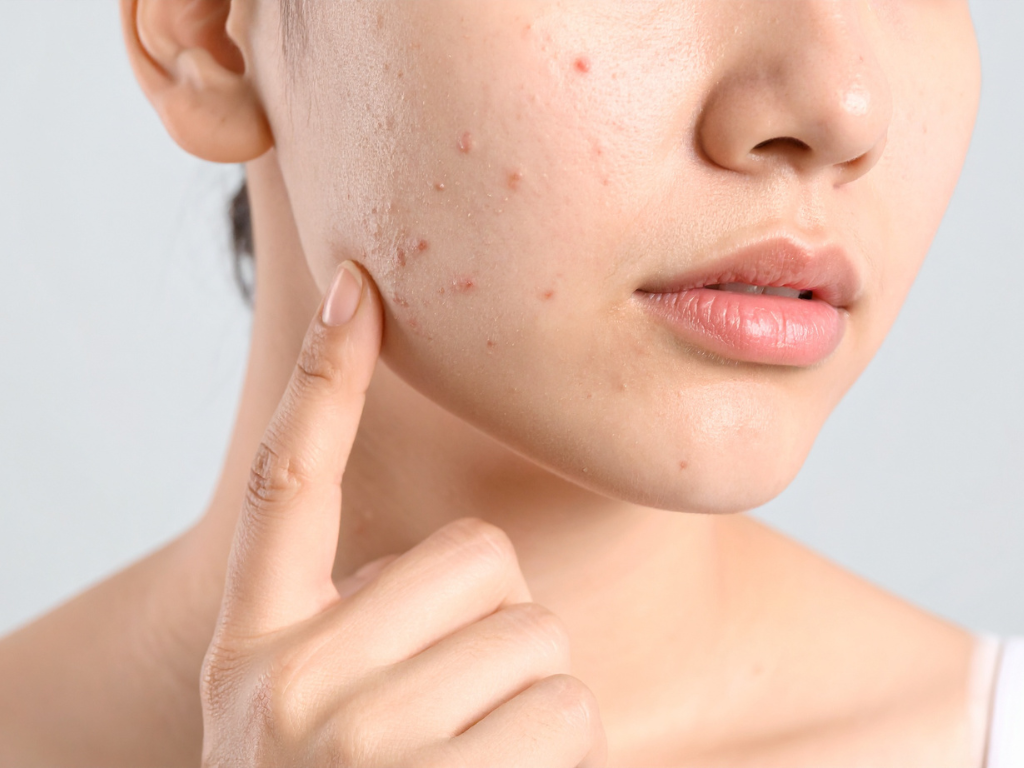
Acne is generally considered persistent, or treatment-resistant, when it has not improved meaningfully after 8 to 12 weeks of appropriate first-line treatment, or when it clears briefly and relapses within weeks of stopping. A few random breakouts around your period do not meet that bar. Persistent acne looks like inflamed papules and pustules returning in the same places every month, cystic lesions that sit deep and throb, or a pattern that simply refuses to respond to anything topical.
The Hidden Drivers Behind Treatment-Resistant Acne
Hormonal acne in adult women is more common than most realise
The textbook picture of acne as a teenage problem is outdated. Adult female acne affects roughly 15 to 20 percent of women, and hyperandrogenism, an excess of male-pattern hormones, is present in about half of those cases. Around 70 percent of hyperandrogenic cases sit within polycystic ovary syndrome (PCOS), which raises adult acne prevalence roughly 1.6 times compared with the general female population.
The clinical signature is distinctive. Lesions cluster along the jawline, chin, and lower cheeks. Flares align with the luteal phase of the menstrual cycle. There are often fewer surface comedones and more tender, deeper papules that take weeks to resolve. When this pattern appears, a hormonal workup, including total and free testosterone, DHEA-S, and LH to FSH ratio, changes the entire treatment plan. This is why a real medical acne consultation includes a menstrual history and bloodwork when indicated, not only a skin exam.
Cystic and inflammatory acne
Nodulocystic acne involves lesions that sit below the dermis. They are painful, last weeks, and scar with much higher frequency than superficial papules. No serum reaches that depth. Trying to treat true cystic acne with skincare is the single most common reason patients arrive at a specialist clinic with established scarring that could have been prevented.
Treatment here is prescription-grade. Oral antibiotics such as doxycycline or minocycline reduce inflammation and bacterial load over a defined course, usually three months. Intralesional corticosteroid injections shrink active cysts within 48 hours. For severe, recurrent, or scarring acne, oral isotretinoin remains the only treatment that addresses all four drivers at once.
The Singapore climate makes some cases harder
The Dermatological Society of Singapore’s acne management guidelines explicitly note that the humid tropical environment aggravates acne and folliculitis, and that topical retinoids can produce more photosensitivity and dermatitis under strong local sun exposure. Heavy sweating under makeup, repeated sunscreen reapplication, and year-round humidity create conditions that mild surface products struggle against.
One misdiagnosis worth naming is Pityrosporum folliculitis, a yeast-driven condition that looks like acne and often flares across the chest, upper back, and forehead in Singapore’s climate. It does not respond to antibiotics or benzoyl peroxide. It needs antifungal treatment. Patients routinely spend months on the wrong regimen because the two conditions look similar to the untrained eye. The other common mimic sits on the face rather than the trunk: inflamed bumps on a persistently red central face are often papulopustular rosacea rather than adult acne, and acne actives make it worse.
Why Skincare Alone Keeps Hitting a Wall
The structural limit of over-the-counter products
Cosmetic products in Singapore are regulated to stay below active drug concentrations. A 2 percent salicylic acid cleanser cannot match a prescription 0.1 percent adapalene gel in comedone reduction. A niacinamide serum does not suppress androgen receptors in sebaceous glands the way spironolactone does. These are not close substitutes. They operate on different biological levels.
When extended self-treatment backfires
There is a clear pattern in clinical practice: patients who spend 12 to 24 months cycling through influencer-recommended routines before seeking medical care arrive with more scarring, more post-inflammatory hyperpigmentation, and more psychological distress than patients who present within the first few months of persistent breakouts. Time is not neutral with inflammatory acne. Every cyst that heals without treatment leaves a measurable risk of permanent textural damage, which then needs separate and often more expensive work to revise.
What a Specialist Dermatology Workup Actually Includes
Diagnosis comes before treatment
A proper consultation begins with grading: mild comedonal, moderate papulopustular, or severe nodulocystic, based on lesion count, type, and distribution. The dermatologist maps lesions against likely drivers. Chin and jawline distribution points towards hormonal involvement. Central face and forehead clusters with blackheads point to comedogenic triggers. Chest and back involvement raises the question of folliculitis or cystic patterns that may justify systemic treatment earlier.
Family history, current medications (certain progestins, corticosteroids, and lithium aggravate acne), cosmetic habits, and any signs of hyperandrogenism such as irregular periods, hirsutism, or androgenic hair thinning all inform the plan.
Matching the treatment to the driver
Treatment is stratified. The National Skin Centre’s clinical reference on acne vulgaris outlines the standard escalation used across Singapore dermatology: topical retinoids and benzoyl peroxide for mild cases, oral antibiotics added for moderate inflammatory disease, and isotretinoin reserved for severe or treatment-resistant presentations.
For hormonal acne in women, combined oral contraceptives and spironolactone are evidence-based options that work directly on androgen signalling. These are prescription medicines that require assessment, baseline bloods, and follow-up. They are not interchangeable with skincare.
For severe or scarring acne, oral isotretinoin reduces sebum production by roughly 80 to 90 percent within six weeks and carries a high long-term remission rate. It also carries real responsibilities, including strict contraception in women of reproductive age, monitoring of liver function and lipids, and management of dryness. A dermatologist who places patients on isotretinoin needs the experience to calibrate cumulative dose properly, which is why this medication is best prescribed and monitored by a specialist rather than a general practitioner. Patients weighing this option can discuss suitability during an initial dermatology consultation.
Addressing the aftermath
Once active acne is controlled, what remains often splits into three categories that need different treatments. Post-inflammatory erythema, the flat red marks, responds well to vascular lasers. Post-inflammatory hyperpigmentation, the brown marks more common in Asian and darker skin types, responds to topical tyrosinase inhibitors, chemical peels, and pigment-targeting lasers, covered in detail in our guide to dark marks after acne. True atrophic scarring, meaning ice pick, boxcar, and rolling scars, needs a combination approach: subcision, TCA CROSS, fractional lasers, and microneedling, each selected by scar morphology.
A clinic that handles acne properly does not stop at clearing breakouts. It plans the acne scar treatment and pigment work as part of the same arc, often beginning once the skin has stabilised for several months. Clinics with deeper acne scar revision experience tend to produce better long-term results because they understand which scars respond to which technique.
When Do You Need an Acne Skin Doctor Rather Than a Routine?
The occasional hormonal breakout does not need a specialist. Three months of a proper routine with no meaningful change does, and so do deep painful cysts, new scars or dark marks, and breakouts that track your cycle without responding to anything topical.
The distinction that matters is whether a clinic operates as specialist dermatology, with diagnostic capacity and prescription access, or as an aesthetic practice offering facials and cosmetic procedures. For a fuller comparison of the two routes and what each is equipped to do, see GP versus dermatologist in Singapore.
Conclusion
Persistent acne is rarely a skincare failure. It is a signal that the biological drivers, hormonal, inflammatory, or structural, sit beyond what any serum can reach. Singapore’s humid climate adds its own complications, and the longer real treatment is delayed, the higher the risk of scarring that needs separate work to reverse.
If your acne has not improved after a fair trial of skincare, get a specialist opinion before more marks settle in. Acne treatment in Singapore starts with a grading and a diagnosis rather than a product. Book a consultation with Dr Ang Sue-May at Skincodes to get a treatment plan matched to the actual cause of your breakouts, not the one your last product label promised.
FAQs About Persistent Acne
What is the difference between persistent acne and regular breakouts?
Regular breakouts clear within a few weeks and respond to basic skincare. Persistent acne keeps returning in the same places, resists 8 to 12 weeks of appropriate treatment, and often involves inflammatory or cystic lesions. At this point, a dermatologist assessment is the right step.
Can hormonal acne in Singapore be treated without going on the Pill?
Yes. Spironolactone is commonly prescribed for hormonal acne in women and works on androgen receptors without being a contraceptive. Your dermatologist can also consider topical antiandrogens and address underlying conditions such as PCOS directly.
Is isotretinoin safe, and who qualifies for it?
Oral isotretinoin is prescribed in Singapore for severe, scarring, or treatment-resistant acne. It is highly effective but requires specialist supervision, baseline bloodwork, and strict contraception in women of reproductive age. A dermatologist will assess whether the benefit outweighs the risks in your case.
Why does my acne get worse in Singapore’s climate?
Heat, humidity, and heavy sweating can aggravate acne and fungal folliculitis, which often mimics acne. Occlusive sunscreens and long hours in masks or helmets worsen this. A dermatologist can distinguish true acne from Pityrosporum folliculitis, which needs antifungal treatment rather than antibiotics.
Will treating my acne also clear my acne scars?
No. Active acne and acne scarring are two separate problems. Clearing breakouts stops new damage, but existing atrophic scars need dedicated procedures such as subcision, TCA CROSS, or fractional lasers. A specialist clinic plans both phases as part of the same treatment arc.
What does an acne skin doctor do that a facial cannot?
A specialist dermatologist grades the acne, maps lesion distribution against likely drivers, takes a medication and menstrual history, orders bloodwork where hyperandrogenism is suspected, and prescribes. A facial works on the skin surface. Neither substitutes for the other, but only one can identify why the acne is being generated.
Do I need a referral to see a dermatologist for acne in Singapore?
Private specialist dermatology clinics accept direct bookings without a referral. Subsidised care at the National Skin Centre requires a referral from a polyclinic or GP first. First consultations at private specialist clinics typically run S160toS350, with treatment costs quoted after assessment.