Home > Treatments > Scalp Conditions
Scalp Conditions Treated by a Dermatologist in Singapore
Most people treat a flaky, itchy scalp as dandruff and buy a medicated shampoo. If that has not sorted it within a few weeks, it is usually something else.
Seborrhoeic dermatitis, scalp psoriasis, fungal infection and folliculitis all cause flaking and itching, and each one is treated differently. Scalp inflammation left alone can also cause hair to shed, which is why the scalp usually gets assessed before any hair loss treatment starts.
Scalp Conditions We Treat
Seborrhoeic dermatitis and stubborn dandruff
Greasy yellowish scale with redness underneath, often spreading to the eyebrows, the sides of the nose and behind the ears. Singapore’s humidity keeps it going all year. It is controlled rather than cured, and it returns when treatment stops.
Scalp psoriasis
Thick silvery plaques with clear edges, often extending past the hairline onto the forehead or neck. Regularly mistaken for bad dandruff. Picking the scale off can bring on more plaques, so it needs a different approach.
Fungal scalp infection
Scaly patches with broken hairs, sometimes with a boggy, tender swelling. More common in children. Shampoo does not reach the hair follicle, so this one needs oral treatment.
Folliculitis and scalp acne
Tender spots around the hair follicles. If it keeps recurring it can scar, and hair does not grow back through scar tissue, which is why it is worth being seen early.
When a Scalp Problem Is Causing Hair Loss
Inflammation around the follicle interrupts the growth cycle. With most scalp conditions, the shedding stops and the hair returns once the inflammation is under control.
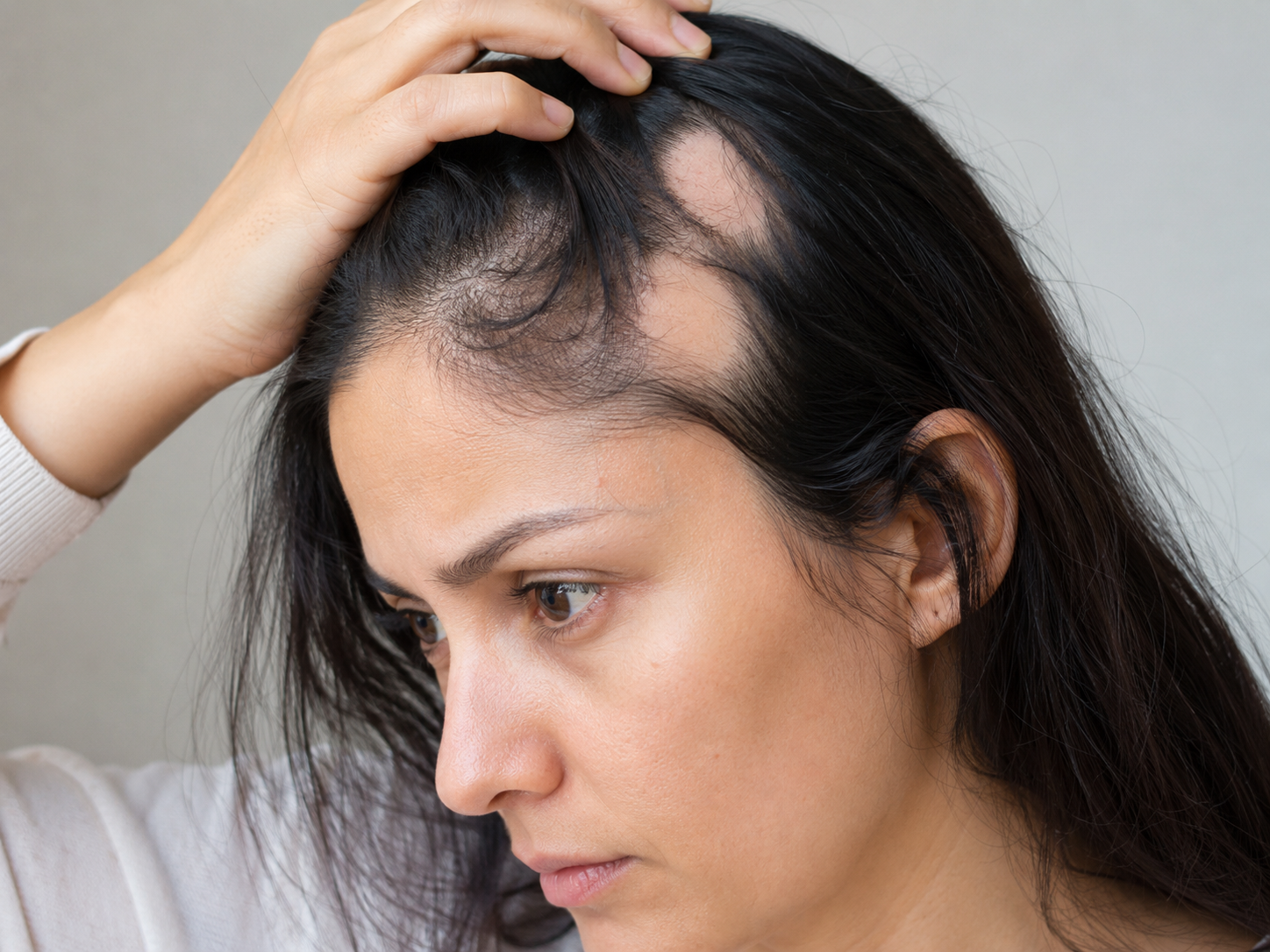
Scarring alopecia is the exception. It destroys the follicle, and hair lost that way does not grow back. The early signs are easy to miss: a smooth patch with no visible pores, sometimes with itching or a burning feeling.
That is why a scalp problem that will not settle is worth having looked at rather than waiting out.
What to Expect at Skincodes
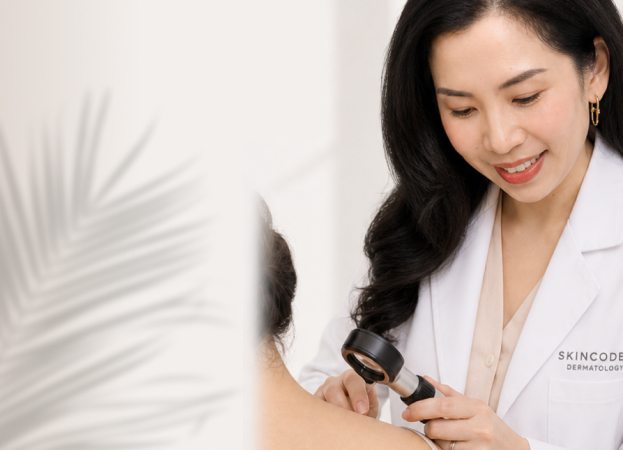
Dr Ang examines the scalp directly and with trichoscopy, which magnifies the follicles and the surface. Where it is not obvious, a swab or a small scalp biopsy settles the diagnosis before treatment starts.
Treatment usually pairs a medicated regimen with a lighter routine to keep it settled, since most scalp conditions are managed rather than cured. If hair has already been lost, the scalp gets treated first and the hair is reviewed afterwards.
Related at Skincodes
Common Questions About Scalp Conditions
Is it dandruff or something else?
Ordinary dandruff gives fine white flakes and settles with medicated shampoo. If the scale is greasy and yellow, if the skin underneath is red, if it goes past the hairline, or if shampoo has not helped after a few weeks, it is more likely seborrhoeic dermatitis or psoriasis.
Can a scalp condition make my hair fall out?
Yes. Inflammation around the follicle interrupts the growth cycle and causes shedding. In most cases the hair comes back once the inflammation is controlled. With scarring alopecia the follicle is destroyed and the loss is permanent.
Why is my scalp worse in Singapore?
Heat, humidity and sweat all suit the yeast behind seborrhoeic dermatitis, and air-conditioning dries the scalp out in between. It tends to stay active all year here rather than flaring seasonally.
Will I be on medicated shampoo forever?
Most scalp conditions are controlled rather than cured, so some maintenance is usually needed. That is normally much lighter than the initial treatment, often a wash once or twice a week.
Dermatologist or hair clinic?
A scalp condition is a medical skin problem. It is diagnosed by examination, trichoscopy and sometimes a biopsy. A hair clinic selling treatment packages without a diagnosis has no way to tell these conditions apart.
Start Your Consultation Today
Seeking specialist dermatology care with clear guidance and a treatment plan built around your skin?
Our team is here to support you.