Home > Treatments > Pico Laser
Pico Laser in Singapore
A pico laser fires in pulses lasting a trillionth of a second. That is short enough to shatter pigment by pressure instead of heat, so less heat spreads into the skin around it. In Asian skin that matters, because heat is what triggers the darkening people are trying to get rid of.
Skincodes uses the Deka Toro, which runs a 785nm picosecond wavelength alongside 1064nm and 532nm nanosecond delivery. Dr Ang Sue-May sets the wavelength and the energy after assessing your skin and what is being treated.
What Pico Laser Treats at Skincodes
Pico laser suits some concerns and not others. What it can do depends on how deep the target sits.
Pigmentation and sun spots
Freckles, sun spots and marks left behind by inflammation usually respond over several sessions. Melasma is handled differently and far more carefully, because strong settings can make it darker.
Acne scarring
The 785nm wavelength prompts collagen remodelling without the recovery time of ablative resurfacing. It works on shallow and mixed scarring, and is often paired with subcision or fractional CO2 where scars run deeper.
Tattoo removal
Shorter pulses break ink into smaller pieces than older lasers do, and smaller pieces clear more easily. How many sessions you need depends on the colours, how densely the ink was packed, and how long the tattoo has been there.
Skin texture and enlarged pores
Repeated controlled stimulation in the dermis smooths surface texture and makes pores look smaller. The change is gradual and builds across the course.
What Pico Laser Does Not Treat
Deep boxcar and ice pick scars. Those need subcision or resurfacing. Pico laser on its own will not lift them.
Active acne. It does nothing for inflammation or bacteria.
Redness and thread veins. Those need a vascular laser at a different wavelength.
Melasma as a starting point. Melasma is driven by hormones and comes back. Laser has a role, but only after topical and oral treatment, and never as the whole plan.

What to Expect at Skincodes
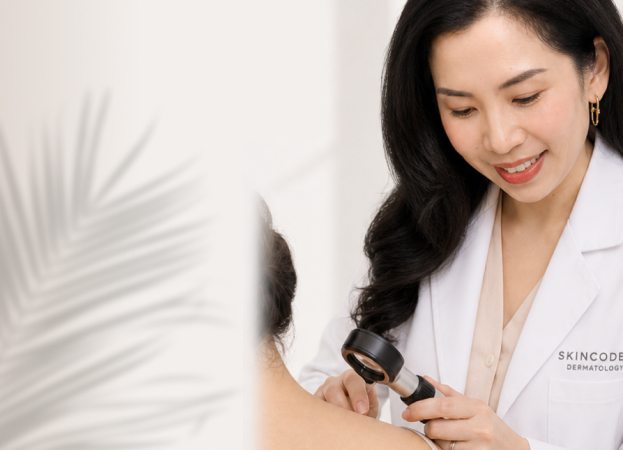
Dr Ang assesses your skin type and what is being treated, then sets the wavelength and energy. Where there is a higher risk of darkening, she tests a small patch first. Sessions are spaced several weeks apart so the skin can settle and she can judge the response before changing anything.
Expect mild redness for a few hours. On pigmented spots, the pigment often looks darker before it lifts. Results build across the course rather than showing up after one visit, and how carefully you protect your skin from the sun in between makes more difference than most people expect.
Related at Skincodes
Common Questions About Pico Laser
Is pico laser safe for Asian skin?
Yes, when the settings suit the skin type. Shorter pulses produce less heat than older lasers, and heat is what drives post-inflammatory darkening in deeper skin tones. The safety comes from the assessment and the settings, not from the machine.
Does it hurt?
Most people describe it as a rubber band snapping against the skin. Numbing cream is used for larger areas and for tattoos. Redness settles within a few hours.
How is it different from fractional CO2?
Pico laser targets pigment with pressure and very little heat, so you can go back to normal quickly. Fractional CO2 removes tiny columns of tissue to force collagen regeneration, which reaches deeper scarring but needs several days of recovery. Many courses use both.
Can pico laser treat melasma?
It can be part of a melasma plan, at gentle settings, after topical and oral treatment are already working. It is not a first choice and it is not a cure.
How many sessions will I need?
It depends what is being treated. Surface pigment usually needs fewer sessions than tattoo ink or scarring. Dr Ang gives a realistic number at the first consultation.
Start Your Consultation Today
Seeking specialist dermatology care with clear guidance and a treatment plan built around your skin?
Our team is here to support you.