Most dark marks left by acne are post-inflammatory hyperpigmentation, flat brown spots that fade, not scars. Knowing how to fade dark marks from acne starts with naming the mark correctly, because brown and red marks respond to different treatment. This blog will walk you through the treatments with real evidence behind them and the timeline you can expect.
What acne pigmentation is and why it happens
Acne pigmentation is the discolouration an acne spot leaves once the spot itself has healed. The brown form is post-inflammatory hyperpigmentation: inflammation in and around the spot stimulates melanocytes, the pigment-producing cells, and they deposit extra melanin in the skin. Dermatology journals now often call it acne-induced pigmentation. It is one type of hyperpigmentation, and it behaves differently from sunspots or melasma.
Where the melanin settles matters. Pigment in the epidermis, the top layer, looks brown and tends to respond to treatment. Pigment that drops into the dermis below looks grey or blue-grey and clears much more slowly.
How common acne pigmentation is in Asian skin
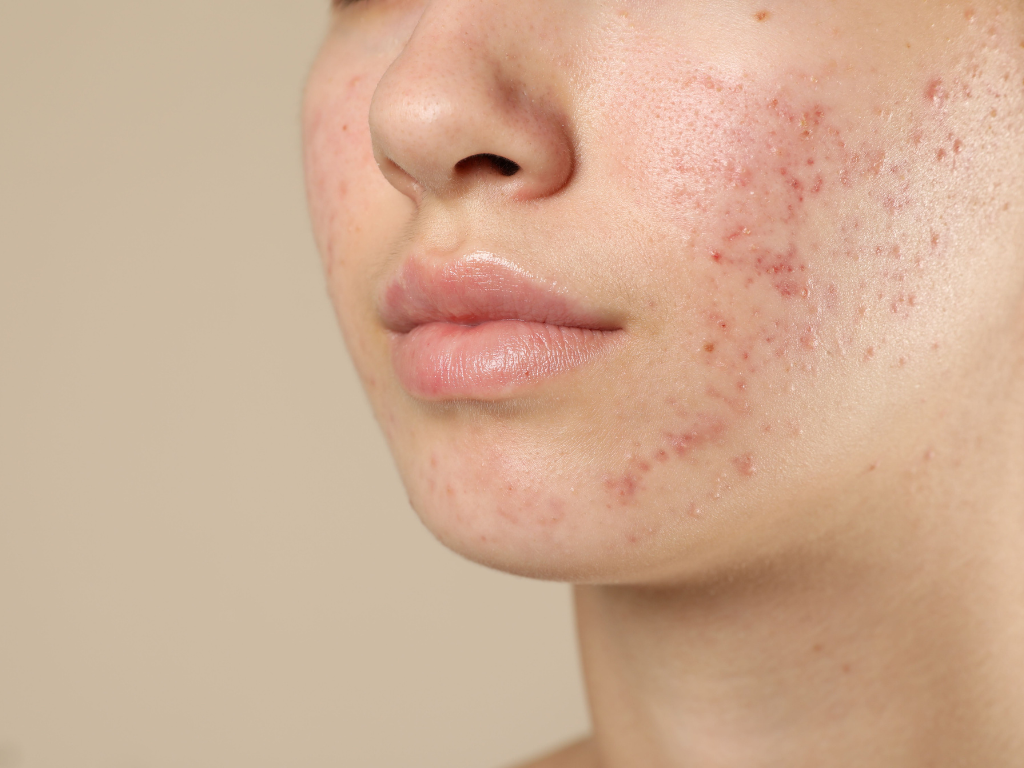
Acne pigmentation is common enough in Asia that a group of dermatologists set out to measure it. The Asian Acne Board, which included a dermatologist from Singapore’s National Skin Centre, assessed 324 consecutive acne patients across seven Asian countries and published the results in the Journal of Dermatology in 2016. They found:
- 58.2% of patients had PIH, even though most had only mild to moderate acne
- the pigmentation lasted at least a year in more than half of patients, and five years or longer in 22.3%
- many patients found the marks as bothersome as the acne itself, or more so
- picking and squeezing spots was commonly reported, which the authors flagged as a risk factor people can change
A 2026 systematic review in Skin Health and Disease puts the reported prevalence of acne pigmentation at between 45.5% and 87.2% across published studies.
Why darker skin marks more easily
Skin with more melanin has more reactive melanocytes, so the same breakout leaves a darker, longer-lasting mark. The 2026 review adds a detail that matters for Asian and darker skin: early acne inflammation can be hard to see as redness and may show up as brown pigment instead. That is one reason the review’s authors argue acne pigmentation should be managed as part of acne treatment, not left as a cosmetic afterthought.
Dark marks are not acne scars
A dark mark is flat and changes only the colour of the skin, while a scar changes the surface as a dent or a raised bump. Run a fingertip across it: if the skin feels smooth, it is a mark, and marks can fade. Our guide to acne marks versus acne scars explains how to tell them apart and which ones need procedures.
Brown marks and red marks need different treatment
The colour of a mark tells you what is causing it. Brown, tan or grey marks are pigment (PIH). Pink, red or purplish marks are post-inflammatory erythema (PIE), caused by small blood vessels that stayed dilated or damaged after the spot healed.
A simple test helps. Press a clear glass or your fingertip on the mark for a few seconds. A red mark that blanches and briefly fades is PIE, because you are squeezing blood out of the vessels. A brown mark stays the same colour.
The two can overlap, and one ingredient appears to help both. In a 2024 randomised trial at West China Hospital, 15% azelaic acid gel reduced red acne marks significantly more than a placebo gel over 12 weeks. Red marks that persist despite topical care are usually treated with a vascular laser. At Skincodes that means a 585 nm yellow light laser for redness and vascular marks, which targets blood vessels rather than pigment.
Which treatments fade dark marks from acne
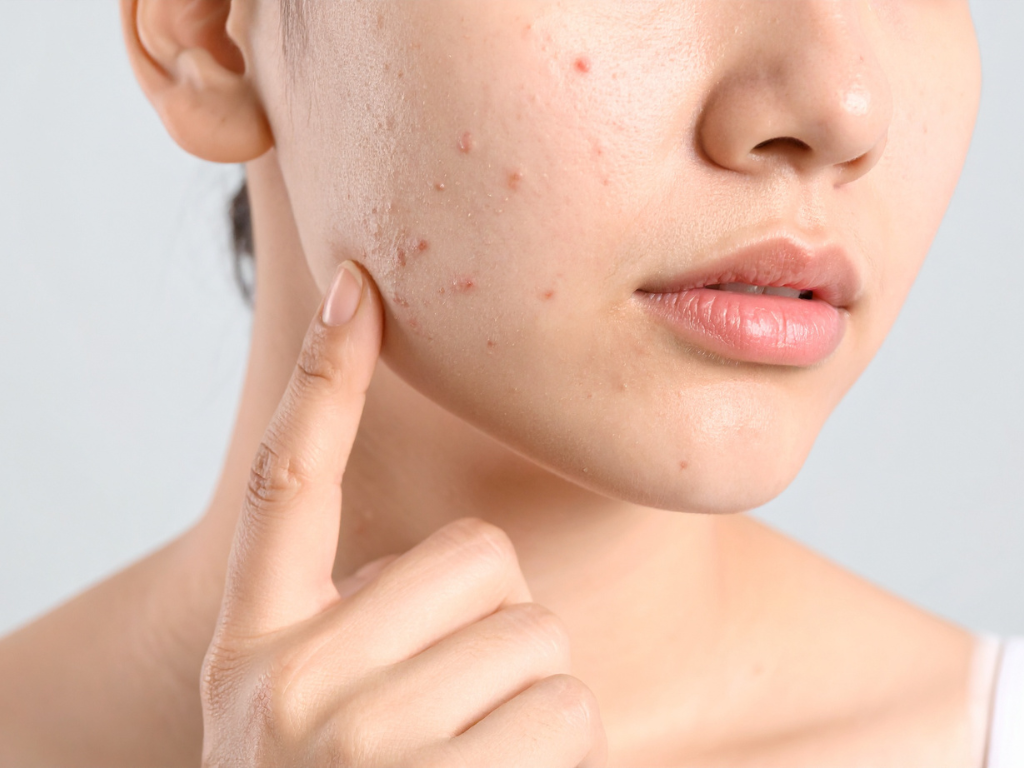
The best-supported approach treats the acne and the pigment together. A 2026 systematic review of acne-induced pigmentation treatments, covering 51 studies and 1,868 patients, found that treatments with both anti-inflammatory and pigment-reducing effects, particularly topical retinoids and azelaic acid, produced partial improvement in most studies. The evidence base is still made up largely of small studies, so no single product has clear-cut proof.
| Treatment | How it helps | What the evidence shows |
| Topical retinoids (prescription) | Treat acne and speed up the shedding of pigmented cells | In a randomised trial of 74 patients with darker skin and acne, a prescription retinoid cream reduced PIH more than a plain base cream over 18 weeks |
| Azelaic acid | Calms inflammation and slows pigment production | In a 2024 trial of 72 patients, 15% gel cut red marks more than placebo; brown marks improved in both groups, with a drop in melanin in treated marks |
| Niacinamide | Reduces the transfer of pigment into surrounding skin cells | A 2002 study in Japanese women found 5% niacinamide reduced facial hyperpigmentation within four weeks. Evidence for acne marks specifically is weaker |
| Sunscreen | Stops UV from darkening existing marks | Used alongside every treatment in the trials above; tinted formulas also block visible light |
| Salicylic acid peels (in clinic) | Exfoliate and treat acne | In 25 patients with skin types V and VI, five 20% to 30% peels after two weeks of a prescription lightening cream produced moderate to significant improvement in 88%, across conditions including acne and PIH |
| Benzoyl peroxide on its own | Kills acne bacteria | Helps active acne, but in the 2026 review’s pooled data it did not improve acne pigmentation, and one trial recorded worsening |
How to use these treatments without creating new marks
Irritation is itself an injury, and injured skin in acne-prone, pigment-prone faces can produce fresh PIH. That is the main risk with retinoids and exfoliating acids. Start a retinoid a few nights a week, pair it with a moisturiser, and ease off if the skin turns red or stings. Adding several strong actives at once makes irritation more likely, not results faster.
What tends to disappoint
Some popular approaches do little for acne marks on their own. In the 2026 review, home microneedling with a dermaroller produced poor or no improvement in most patients and worsened pigmentation in 3 of 15. Lasers and intense pulsed light gave variable results, and the review flags treatment-induced pigmentation as an important risk in darker skin, which our article on whether laser can make pigmentation worse covers in detail.
How long acne dark marks take to fade
Brown marks in the upper skin usually improve over a few months with consistent care, while grey or deeper marks can take much longer. The 2026 review describes acne pigmentation as persisting for months to years, and the Asian Acne Board found more than half of patients still had marks a year on.
Treatment speeds things up without making it instant. In the review’s pooled topical studies, partial improvement appeared after a mean of about seven weeks. The azelaic acid trial above measured results at 12 weeks and the retinoid trial at 18 weeks, so giving a product two weeks and then switching tells you very little. Around three months of steady use is a fairer test.
Why acne dark marks stop fading
When marks stall, something is usually adding new pigment faster than treatment removes the old.
Sun exposure in Singapore
UV stimulates melanocytes, so an unprotected mark keeps darkening while you treat it. Singapore’s National Environment Agency puts the typical daily maximum UV index at 6 to 9. Sunscreen habits lag behind that: a population survey of Singapore adults published in the Annals of the Academy of Medicine, Singapore in 2019 found only 23.9% of respondents applied sunscreen of SPF 30 or higher. Visible light can deepen pigment too, which is why tinted sunscreen with iron oxides is worth considering for stubborn marks.
Picking and squeezing
Every squeeze restarts inflammation in the spot you are trying to fade. The Asian Acne Board singled out picking as a common, changeable risk factor for acne pigmentation.
Acne that is still active
Each new breakout lays down a new mark, so fading old marks while spots keep appearing is slow going. If breakouts are persistent, deep or cystic, specialist acne treatment in Singapore that controls the acne will do more for your marks than any brightening serum.
Marks that are not acne pigmentation
Symmetrical brown patches across both cheeks, the forehead or the upper lip, especially without a history of spots in those places, may be melasma rather than acne marks. Melasma needs a different plan, and our guide to the types of facial pigmentation shows how the two look different.
When to see a dermatologist for acne marks
See a dermatologist if marks have not improved after about three months of consistent care, look grey or blue-grey, are widespread, or keep appearing because the acne itself is not under control. A specialist can confirm whether a mark is PIH, PIE, melasma or early scarring, then prescribe treatments that are not available over the counter.
In clinic, treatment for acne marks usually combines acne control with prescription topical therapy, and may add chemical peels once the skin is calm. Lasers are used selectively and at conservative settings in darker skin. At Skincodes, Dr Ang Sue-May, who subspecialised in acne and acne scarring under Professor Tony Chu at Hammersmith Hospital in London, assesses whether marks, scars or active acne should be treated first. Options for pigmentation treatment in Singapore are then matched to the type and depth of the pigment.
Conclusion
Acne dark marks fade most reliably when the acne is controlled, the mark is correctly identified as brown or red, and treatment is given a fair three months alongside daily sunscreen. Picking and irritation slow everything down.
If your marks have stalled, look grey, or you are not sure they are acne marks at all, book a skin assessment with Dr Ang Sue-May for a diagnosis and a plan matched to your skin.
Frequently asked questions
Do dark marks from acne go away on their own?
Often, but slowly. In the Asian Acne Board study, pigmentation lasted at least a year in more than half of patients and five years or longer in 22.3%. Controlling acne, wearing sunscreen daily and not picking all help marks fade faster, and topical treatment can shorten the wait further.
What is the fastest way to fade acne dark marks?
Control active acne, use an evidence-backed treatment such as a topical retinoid or azelaic acid, and wear sunscreen every day. In pooled studies from a 2026 systematic review, topical treatments produced partial improvement after a mean of about seven weeks. Avoid picking and harsh products, since irritation creates new marks.
Is niacinamide or azelaic acid better for acne marks?
Azelaic acid has stronger evidence for acne marks specifically, because it treats inflammation and pigment together and helped red acne marks in a 2024 randomised trial. Niacinamide reduced general facial hyperpigmentation in a 2002 study but has weaker acne-specific data. The two can be used together if your skin tolerates both.
How do I know if an acne mark is PIH or PIE?
Look at the colour and press on it. Brown, tan or grey marks are PIH, which is pigment. Pink or red marks that briefly fade under a pressed glass or fingertip are PIE, caused by dilated blood vessels. PIE responds to vascular treatment, while PIH responds to pigment treatment and sun protection.
What is acne pigmentation?
Acne pigmentation is discolouration left after an acne spot heals. It is usually post-inflammatory hyperpigmentation, where inflammation triggers extra melanin, and it is common in Asian and darker skin. The Asian Acne Board found it in 58.2% of acne patients across seven Asian countries. It is flat and fades, unlike acne scars.
Does sunscreen help acne marks fade?
Yes. UV stimulates pigment cells, so unprotected marks darken even while you treat them. Use a broad-spectrum sunscreen of at least SPF 30 daily and reapply outdoors. For stubborn brown marks, a tinted sunscreen containing iron oxides also blocks visible light, which can deepen pigmentation in darker skin.
Can laser remove dark marks from acne?
Sometimes, but results vary, and laser is rarely the first step. A 2026 systematic review found variable responses to lasers and intense pulsed light for acne pigmentation, with a risk of treatment-induced pigmentation in darker skin. Most marks are better treated first with acne control, topical therapy and sunscreen, with laser considered by a dermatologist for stubborn cases.