Home > Conditions > Sun Damage
Sun Damage Treatment Singapore
Sun Damage Treatment Singapore
Sun damage – medically termed photoaging – is the premature ageing of the skin caused by cumulative ultraviolet (UV) radiation exposure. In Singapore’s tropical climate, where sunshine is abundant year-round, sun damage is one of the most common skin concerns. It manifests as pigmentation irregularities, textural changes, fine lines, and increases the risk of pre-cancerous lesions and skin cancer.
At Skincodes, Dr Ang Sue-May provides comprehensive assessment and treatment for sun-damaged skin, combining reversal of visible damage with strategies to prevent further injury and detect early signs of skin cancer.
Signs & Symptoms
Pigmentary Changes
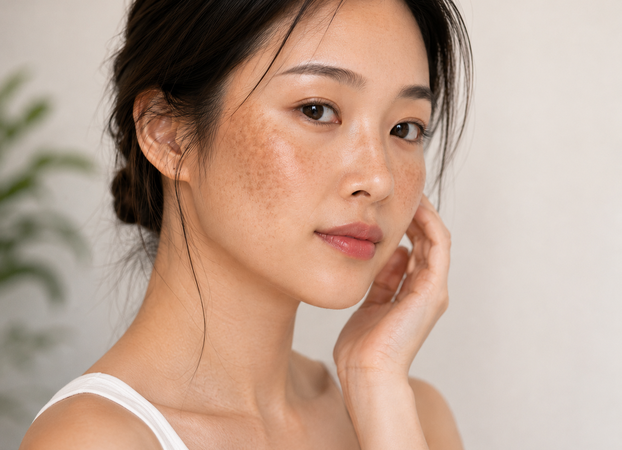
Solar lentigines – Well-defined brown spots (‘age spots’ or ‘liver spots’) on sun-exposed areas
Freckling – Increased number and darkness of freckles
Uneven skin tone – Generalised mottled appearance
Melasma – Hormonally influenced pigmentation worsened by sun exposure
Guttate hypomelanosis – Small white spots where pigment cells have been destroyed
Textural and Structural Changes
Fine lines and wrinkles – Particularly around the eyes and mouth
Coarse skin texture – Loss of smoothness and refinement
Enlarged pores – Sun damage affects collagen supporting pore walls
Actinic elastosis – Yellowish, thickened, leathery skin with prominent creases
Telangiectasia – Visible small blood vessels, particularly on the face
Pre-cancerous and Cancerous Changes
Actinic keratosis – Rough, scaly patches representing pre-cancerous change
Increased skin cancer risk – Both non-melanoma and melanoma skin cancers
The Science of Sun Damage
UV radiation causes damage through several mechanisms:
- DNA damage – Direct injury to skin cell DNA, potentially leading to mutations
- Collagen breakdown – UV stimulates enzymes that degrade collagen and elastin
- Oxidative stress – Formation of free radicals that damage cellular structures
- Immune suppression – Local suppression of the skin’s immune surveillance
- Vessel damage – Fragility and dilation of superficial blood vessels
In Singapore’s equatorial location, UV levels are consistently high throughout the year. Unlike temperate climates where UV intensity varies seasonally, there is no ‘winter respite’ from sun exposure, making consistent protection essential.
Causes & Contributing Factors
- Cumulative UV exposure – The primary driver of photoaging
- Outdoor lifestyle – Work or recreation involving time outdoors
- Previous sunburns – Particularly blistering burns in childhood
- Fair skin types – Less natural protection from melanin
- Occupational exposure – Outdoor workers at higher risk
- Recreational tanning – Including beach and pool activities
- Tanning bed use – Artificial UV is particularly damaging
- Altitude and reflection – UV increases at altitude and reflects off water and concrete
Assessment at Skincodes
Dr Ang conducts a comprehensive evaluation including:
- Full skin examination – Assessing the extent and type of sun damage
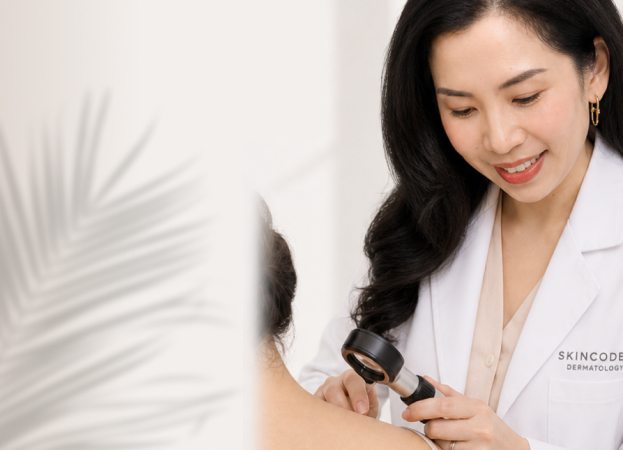
- Dermoscopy – Detailed examination of pigmented lesions
- Skin cancer screening – Identifying actinic keratoses and any suspicious lesions
- Photodocumentation – Baseline photography to monitor changes over time
- Skin type assessment – Determining appropriate treatment parameters
Treatment at Skincodes
Pigmentation Treatment
Pico Laser (Deka Toro) – Ultra-short pulses shatter pigment particles with minimal thermal damage, effective for solar lentigines
Chemical peels – Accelerate cell turnover, improving superficial pigmentation and skin texture
Prescription skincare – Retinoids, vitamin C, and pigment-regulating agents
Textural Improvement
Fractional CO₂ laser – Ablative resurfacing for significant textural concerns and wrinkles
Radiofrequency microneedling – Stimulates collagen remodelling with minimal downtime
Skinboosters – Hyaluronic acid microinjections to improve hydration and skin quality
Biostimulators – Gradual collagen stimulation for skin tightening
Vascular Component
Yellow laser – targets visible blood vessels and redness associated with photodamage, and is highly effective for treating facial telangiectasia.
Pre-cancerous Lesions
Actinic keratoses – rough, scaly patches representing sun-induced cellular damage – are treated with:
- Cryotherapy – Liquid nitrogen for discrete lesions
- Topical field therapy – Treating broader areas of field cancerisation
- Photodynamic therapy – Light-activated treatment for multiple or extensive lesions
- Curettage – Scraping for thicker, suspicious lesions
Why Choose Specialist Surgical Care
Dermatological surgery performed by a specialist offers distinct advantages:
- Accurate pre-surgical diagnosis with dermoscopy. Lesions are assessed carefully as appearances can be
misleading without specialist evaluation - Appropriate margin assessment for cancer excisions based on lesion type and guidelines
- Histological analysis of all removed tissue to confirm diagnosis and clear margins
- Minimally invasive techniques selected to optimise cosmetic outcomes
- Structured follow-up and surveillance for ongoing skin health