Home > Conditions > Spider Veins
Spider Veins Treatment Singapore
Spider Veins Treatment Singapore
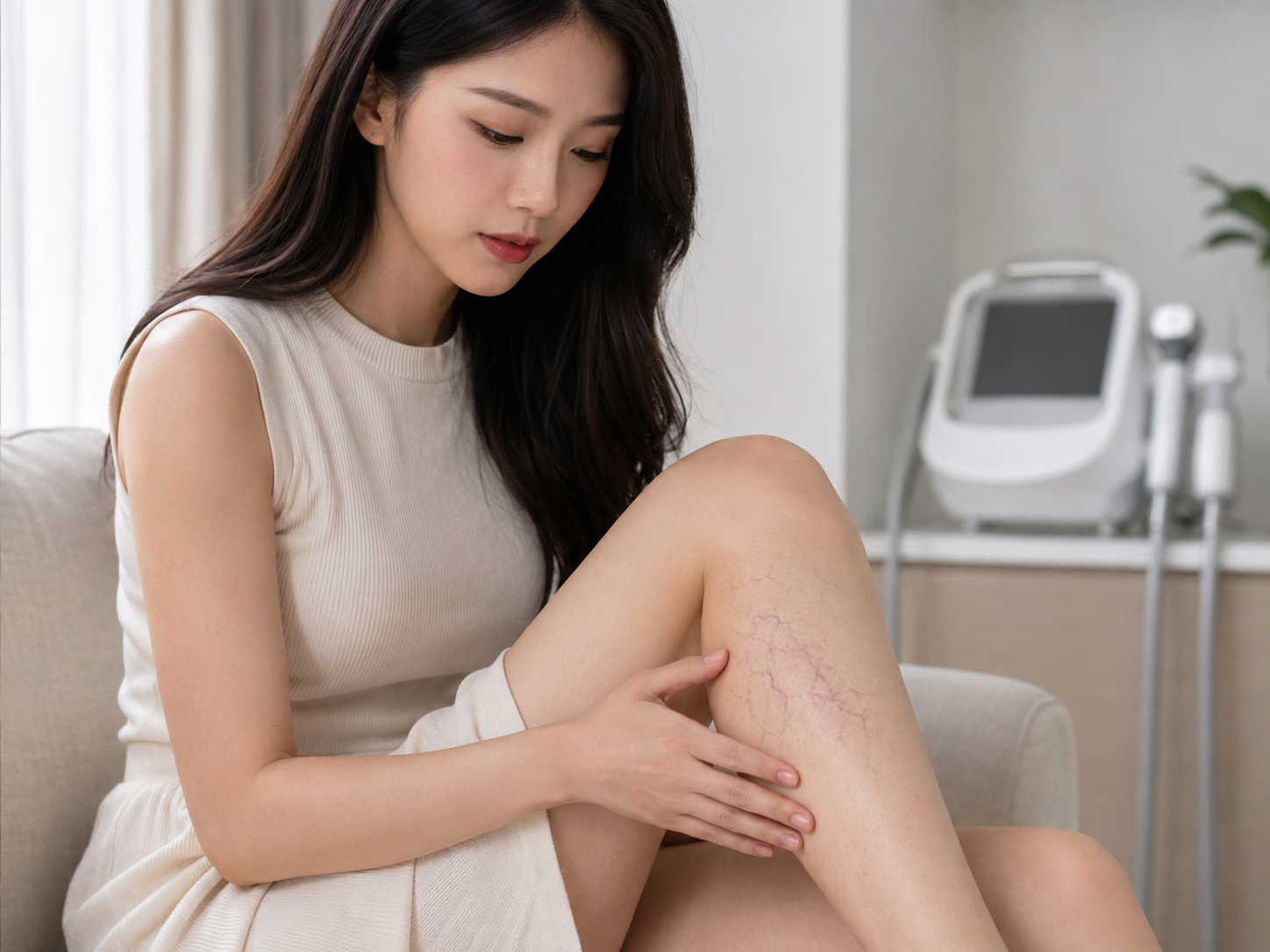
Spider veins – medically known as telangiectasia – are small, dilated blood vessels that appear near the surface of the skin, typically on the legs and face. They appear as thin, web-like networks of red, blue, or purple lines. Whilst harmless and not a medical emergency, spider veins can cause cosmetic concern and, in some cases, associated aching or discomfort. They are distinct from varicose veins, which are larger, raised, and often indicate underlying venous insufficiency.
At Skincodes, Dr Ang Sue-May provides effective, minimally invasive treatments for spider veins, helping patients achieve clearer skin and improved confidence.
Signs & Symptoms
Visible thread-like vessels – Fine red, blue, or purple lines on the skin surface
Web-like patterns – Networks of small veins forming branch-like clusters
Locations – Most common on thighs, calves, ankles, and face (particularly around the nose and cheeks)
Mild aching or burning – Some patients experience discomfort, particularly after prolonged standing
Cosmetic concern – The primary reason most patients seek treatment
Association with varicose veins – Spider veins may coexist with larger varicose veins
Spider veins do not typically cause the significant symptoms associated with varicose veins, such as heavy aching legs, swelling, or skin changes. However, their appearance can significantly affect self-confidence, particularly in Singapore’s warm climate where legs are frequently exposed.
Causes & Contributing Factors
Venous Pressure
Spider veins develop when small valves within the veins weaken, allowing blood to pool and the vessel walls to stretch. This increased pressure causes the characteristic visible pattern.
Risk Factors
Genetics – Family history is the strongest predictor of spider vein development
Age – Vein walls lose elasticity over time, increasing visibility
Gender – Women are more commonly affected than men
Hormonal factors – Pregnancy, puberty, menopause, and hormonal contraception can trigger formation
Prolonged standing or sitting – Occupations requiring long periods in one position
Obesity – Increased pressure on the venous system
Sun exposure – Particularly contributes to facial spider veins
Previous injury or trauma – Can damage small vessels
Facial Spider Veins
Spider veins on the face have somewhat different causes than those on the legs:
Sun damage – Cumulative UV exposure damages skin and vessel walls
Rosacea – This inflammatory condition commonly features facial telangiectasia
Environmental exposure – Wind, extreme temperatures, and altitude
Alcohol – Can cause flushing and vessel dilation
Hereditary factors – Fair skin types are more prone
Assessment at Skincodes
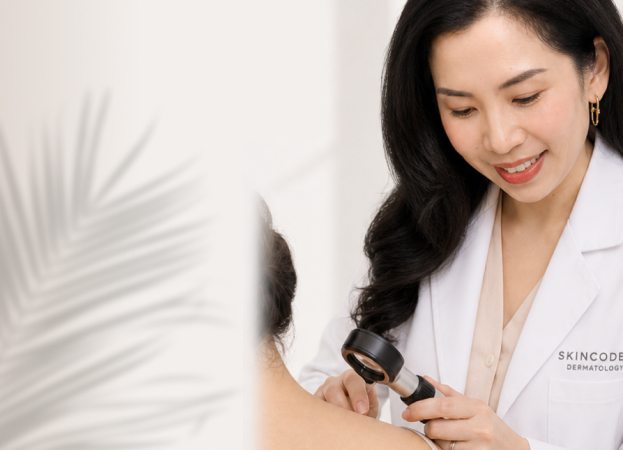
Before recommending treatment, Dr Ang conducts a thorough assessment to:
Confirm diagnosis – Distinguish spider veins from other vascular lesions
Assess for underlying venous insufficiency – Ensure there are no deeper vein problems requiring different treatment
Evaluate skin type – Important for selecting appropriate laser parameters
Review medical history – Identify contraindications to specific treatments
Discuss expectations – Ensure realistic outcomes and appropriate treatment planning
Treatment at Skincodes
Laser Therapy
Laser treatment is highly effective for both facial and finer leg veins. At Skincodes, we use advanced laser systems:
Quanta Yellow Light Laser (585nm) – Highly absorbed by haemoglobin, making it ideal for superficial facial vessels and finer leg veins
The laser delivers precise energy that is absorbed by the blood within the vessel, heating and collapsing the vein wall. The body then naturally reabsorbs the treated vessel over several weeks.
Sclerotherapy
For leg spider veins, sclerotherapy remains the gold standard treatment:
Procedure – A sclerosing solution is injected directly into the affected vein using a very fine needle
Mechanism – The solution irritates the vessel lining, causing it to collapse and seal shut
Over time – The treated vein is absorbed by the body and fades from view
Sessions required – Multiple sessions are typically needed for optimal results
Compression – Wearing compression stockings after treatment enhances outcomes
What to Expect
Consultation – Thorough assessment and treatment planning
Treatment sessions – Laser sessions typically take 15-30 minutes; sclerotherapy 30-45 minutes
Sensations – Mild discomfort, often described as a rubber band snap (laser) or mild stinging (injections)
Recovery – Minimal downtime; most patients return to normal activities immediately
Results timeline – Gradual fading over 4-8 weeks; multiple sessions spaced 4-6 weeks apart
Side effects – Temporary redness, swelling, bruising, or pigmentation changes (usually resolving within weeks)

Prevention and Maintenance
Whilst existing spider veins can be treated effectively, new ones may develop over time. Dr Ang provides guidance on reducing recurrence:
Regular exercise – Promotes healthy circulation
Weight management – Reduces pressure on the venous system
Avoid prolonged standing – Take breaks to move and elevate legs when possible
Compression stockings – For those with occupational risk factors
Sun protection – Essential for preventing facial spider veins
Why Choose Specialist Surgical Care
Dermatological surgery performed by a specialist offers distinct advantages:
- Accurate pre-surgical diagnosis with dermoscopy. Lesions are assessed carefully as appearances can be
misleading without specialist evaluation - Appropriate margin assessment for cancer excisions based on lesion type and guidelines
- Histological analysis of all removed tissue to confirm diagnosis and clear margins
- Minimally invasive techniques selected to optimise cosmetic outcomes
- Structured follow-up and surveillance for ongoing skin health