Home > Conditions > Rosacea and Facial Redness
Rosacea and Facial Redness Treatment Singapore
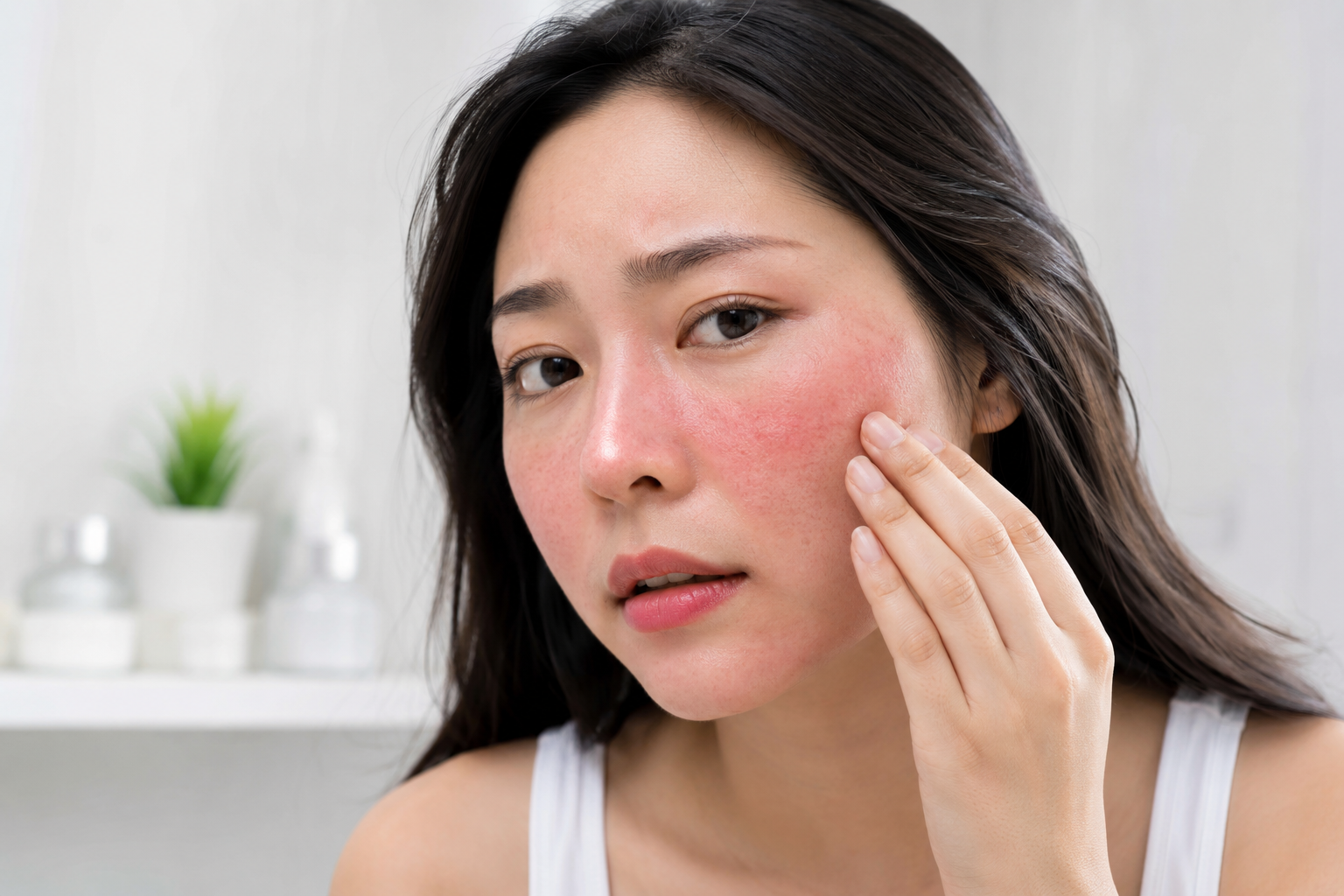
Rosacea is a long-term inflammatory condition of the face. It causes redness that does not settle, visible blood vessels, and often bumps that look like acne but have no blackheads.
It gets mistaken for sensitive skin, adult acne or eczema, which is why most patients arrive here after a year or more of treating the wrong thing.
Dr Ang Sue-May works out the subtype first, then builds the plan around it. Singapore’s heat, humidity and the constant move between outdoor sun and air-conditioning make rosacea harder to control here than in cooler countries.
Which Type of Rosacea Do You Have?
Rosacea has four subtypes. They look different and they are treated differently, which is why the assessment comes first.
Redness and flushing (erythematotelangiectatic)
Persistent redness across the cheeks, nose and forehead, with visible blood vessels. The skin stings or burns with heat, wind or skincare.
Bumps and pustules (papulopustular)
Inflamed papules and pustules that look like acne but have no blackheads. This is the subtype that gets misdiagnosed most often.
Skin thickening (phymatous)
Thickened, uneven skin, usually around the nose. Less common and slower to develop.
Eye involvement (ocular)
Dry, gritty or irritated eyes, sometimes appearing before anything shows on the skin.
Symptoms come and go.
Left untreated, rosacea usually gets worse over time.
Causes & Triggers
The exact cause of rosacea is not fully understood, but it involves a combination of genetic predisposition, immune dysregulation, and vascular reactivity.
Known Triggers
Sun exposure and UV radiation
The most common trigger in Singapore. UV drives the vascular reactivity behind flushing, and even short periods outdoors can set off a flare.
Heat and hot beverages
Hot drinks, hot showers, saunas and moving from air-conditioning into outdoor heat all widen facial blood vessels and bring on redness.
Spicy food and alcohol
Both dilate blood vessels. Red wine and spirits are reported most often, and chilli is a frequent trigger locally.
Physical exertion
Intense exercise raises core body temperature and flushes the face. Cooler timing, shorter intervals and cold water usually keep it manageable.
Stress and emotional changes
Stress and embarrassment trigger flushing through the same vascular pathway. Frequent flushing over time makes background redness more permanent.
Certain skincare products and topical irritants
Alcohol-based toners, fragrance, harsh exfoliants and some active ingredients can set off a flare in reactive skin.
Demodex mites
A skin mite found in higher numbers in some rosacea subtypes, particularly where papules and pustules dominate.
Working out and managing your own triggers
is a central part of keeping rosacea under control long term.
Treatment at Skincodes
There is no cure for rosacea. There is good long-term control, and it depends on getting the subtype right. Redness-dominant rosacea responds to vascular laser. Bump-dominant rosacea usually does not need it, and treating it that way is why many patients arrive having already spent money without result.
Topical Therapies
May include topical anti-inflammatory and anti-parasitic agents, selected based on the dominant features of your rosacea.
Chemical Peels
Superficial peels using gentle acids such as mandelic, azelaic, or low-concentration salicylic acid help exfoliate the outer layer, reduce redness, and unclog pores in mild rosacea.
Oral Therapies
Low-dose oral antibiotic therapy is appropriate for papulopustular rosacea with a significant inflammatory component, and is used for defined treatment courses.
Laser Treatments
Highly effective for managing vascular redness and visible vessels. Modalities used at Skincodes include:
Yellow light laser (585nm) – addresses diffuse redness and telangiectasia across the face with precise treatment for superficial vascular lesions and thread veins
Radiofrequency Microneedling
Combines microneedles with controlled thermal energy to remodel collagen and reduce skin thickening in phymatous rosacea. Stimulates neocollagenesis while minimising epidermal disruption, improving texture and density over multiple sessions.
Polynucleotides (Salmon DNA Skinboosters)
Injectable biorevitalisation delivers purified DNA fragments to repair the skin barrier, hydrate tissue, and reduce inflammation. Strengthens compromised skin, minimises sensitivity, and improves resilience in reactive rosacea without thermal intervention.
Skincare and Lifestyle Guidance
Integrated into every consultation. Dr Ang advises on appropriate products, sun protection strategies, and trigger management to support long-term stability.
Treatment is staged and adjusted over time. Patients are monitored to assess response and modify the plan as needed.
Treatment is staged and adjusted over time.
Patients are monitored to assess response and modify the plan as needed.
What to Expect From Rosacea Treatment
Timeline
Inflammatory bumps usually settle first. Background redness and visible vessels take longer and often need a device-based approach across several sessions.
What makes a case harder
More than one subtype at once. Long-standing rosacea with established vessel changes. Skin already sensitised by years of unsuitable products. Eye involvement, which needs joint management.
Maintenance
Rosacea is managed rather than cured. Once it is settled, most patients move to a lighter maintenance routine with periodic review.
Common Questions About Rosacea
Can rosacea be cured?
No. Rosacea is controlled rather than cured. With the right subtype diagnosis and treatment, most patients reach a stable baseline and stay there on a light routine. Stopping treatment completely usually lets the symptoms return.
How do I know if it is rosacea or acne?
Acne produces blackheads and whiteheads. Rosacea does not. Rosacea bumps sit on a background of persistent redness across the central face, and the skin often stings or burns. Acne treatments can make rosacea worse, which is why the difference matters before treatment starts.
Does Singapore's climate make rosacea worse?
Heat, humidity and moving repeatedly between outdoor sun and air-conditioning are all recognised triggers. Sweat-triggered flushing and rapid temperature change are common flare patterns here, and they need a different approach from cooler climates.
Does laser work for rosacea?
Vascular laser is effective for persistent redness and visible vessels. It does much less for inflammatory bumps, which respond better to medical treatment. Whether laser suits you depends on your subtype.
Will rosacea go away on its own?
Usually not. Untreated rosacea tends to progress, with the redness becoming more permanent and the vessels more visible. Treating it earlier gives a better long-term result than waiting to see if it settles.
Is rosacea contagious?
No. It is an inflammatory condition, not an infection, and it does not pass between people.
Start Your Consultation Today
Seeking specialist dermatology care with clear guidance and a treatment plan built around your skin?
Our team is here to support you.