Home > Conditions > Atopic Dermatitis
Atopic Dermatitis treatment Singapore
Atopic Dermatitis treatment Singapore
Atopic dermatitis is the clinical term for atopic eczema, the most common form of eczema and a condition that frequently begins in infancy or early childhood. It is characterised by a dysfunctional skin barrier, an overactive immune response, and a tendency toward chronic, relapsing inflammation. Many children experience improvement as they grow older, but a significant proportion carry the condition into adulthood, and some develop it for the first time as adults.
Signs & Symptoms
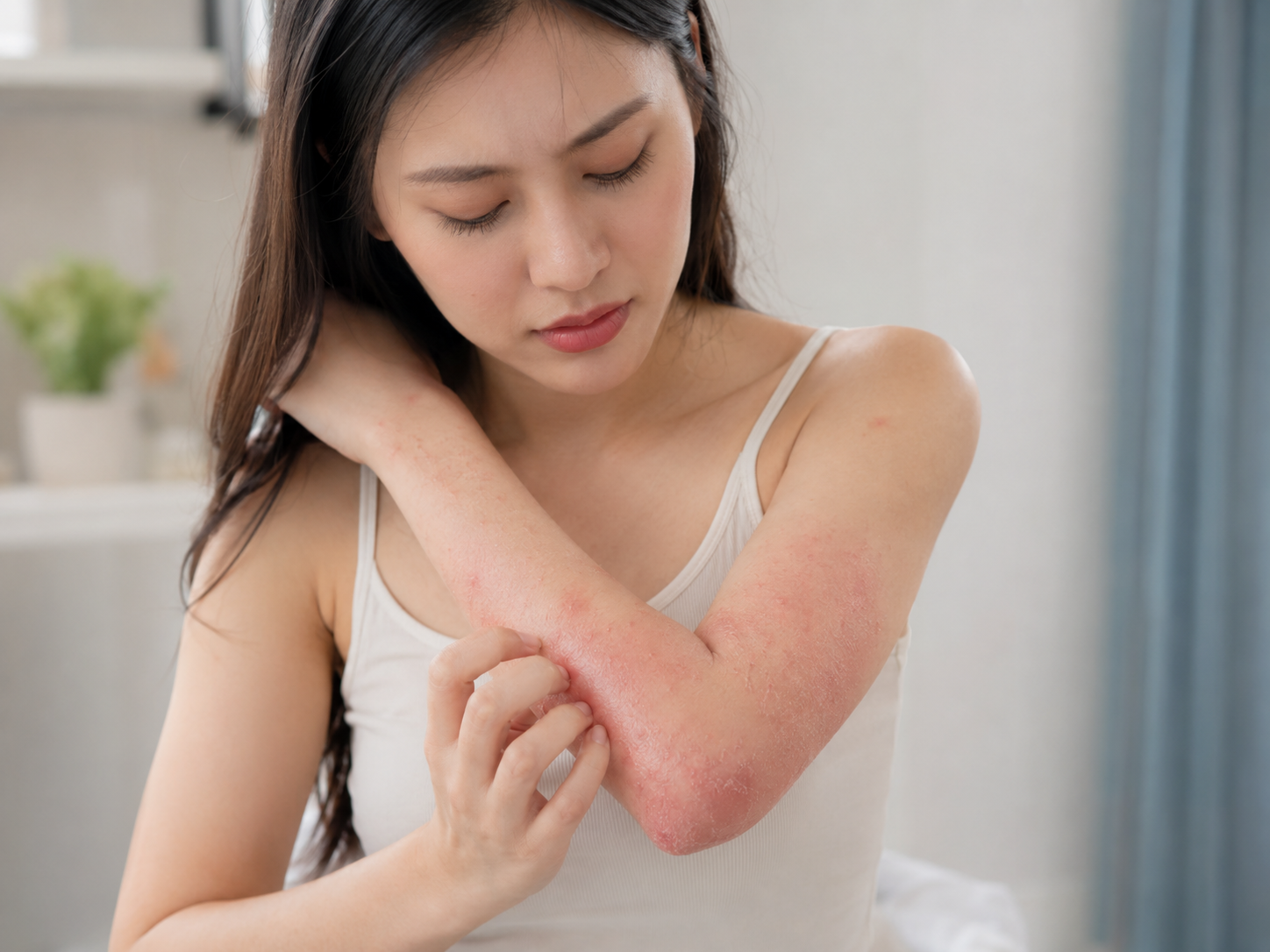
Dry, itchy skin with a pattern of distribution that varies by age – facial and extensor involvement in infants; flexural involvement in older children and adults
Chronic relapsing course, with periods of clear skin interrupted by flares
Skin that is easily irritated by soaps, detergents, heat, and environmental allergens
Thickening of the skin (lichenification) in areas of persistent scratching
Secondary skin infections (bacterial or viral) as a complication of a compromised skin barrier
Causes & Triggers
Atopic dermatitis arises from an interplay of genetic and environmental factors. Many patients have mutations affecting filaggrin – a protein critical to skin barrier integrity – which leads to increased water loss and heightened sensitivity to environmental triggers.
Atopic dermatitis frequently occurs alongside other atopic conditions – a pattern known as the atopic triad:
- Eczema (atopic dermatitis)
- Asthma
- Allergic rhinitis (hay fever)
The presence of one condition increases the likelihood of the others. This atopic background informs how Dr Ang approaches assessment and management, particularly in children.

Long-Term Management at Skincodes
At Skincodes, Dr Ang Sue-May provides comprehensive assessment and long-term management for patients of all ages with atopic dermatitis.
Atopic dermatitis is a condition that benefits from consistent, proactive management rather than reactive treatment of flares alone.
Dr Ang’s approach encompasses thorough assessment of trigger factors, a structured skincare regimen built around barrier repair and emollients, and appropriate use of topical anti-inflammatory therapies – including corticosteroids and calcineurin inhibitors – calibrated to disease severity and site.
For patients with moderate to severe or poorly controlled atopic dermatitis, specialist review supports more comprehensive options, including assessment for systemic therapies or referral for biologics where indicated.
Regular follow-up allows the treatment plan to be adjusted as the patient’s skin changes over time.
Why Choose Specialist Surgical Care
Dermatological surgery performed by a specialist offers distinct advantages:
- Accurate pre-surgical diagnosis with dermoscopy. Lesions are assessed carefully as appearances can be
misleading without specialist evaluation - Appropriate margin assessment for cancer excisions based on lesion type and guidelines
- Histological analysis of all removed tissue to confirm diagnosis and clear margins
- Minimally invasive techniques selected to optimise cosmetic outcomes
- Structured follow-up and surveillance for ongoing skin health