Home > Conditions > Alopecia Areata
Alopecia Areata Treatment Singapore
Alopecia Areata Treatment Singapore
Alopecia areata is an autoimmune condition in which the body’s immune system mistakenly targets hair follicles, causing hair loss that is typically patchy and unpredictable in its course. It is distinct from the gradual miniaturisation of androgenetic alopecia – and understanding that distinction matters, because the two conditions require quite different approaches to management.
Alopecia areata can affect people of any age, including children and young adults, and its impact on wellbeing and self-image can be considerable. At Skincodes, Dr Ang Sue-May provides specialist assessment and targeted care for this challenging condition.
Understanding the Spectrum
Alopecia areata presents across a range of severity:
Alopecia Areata (Classic)
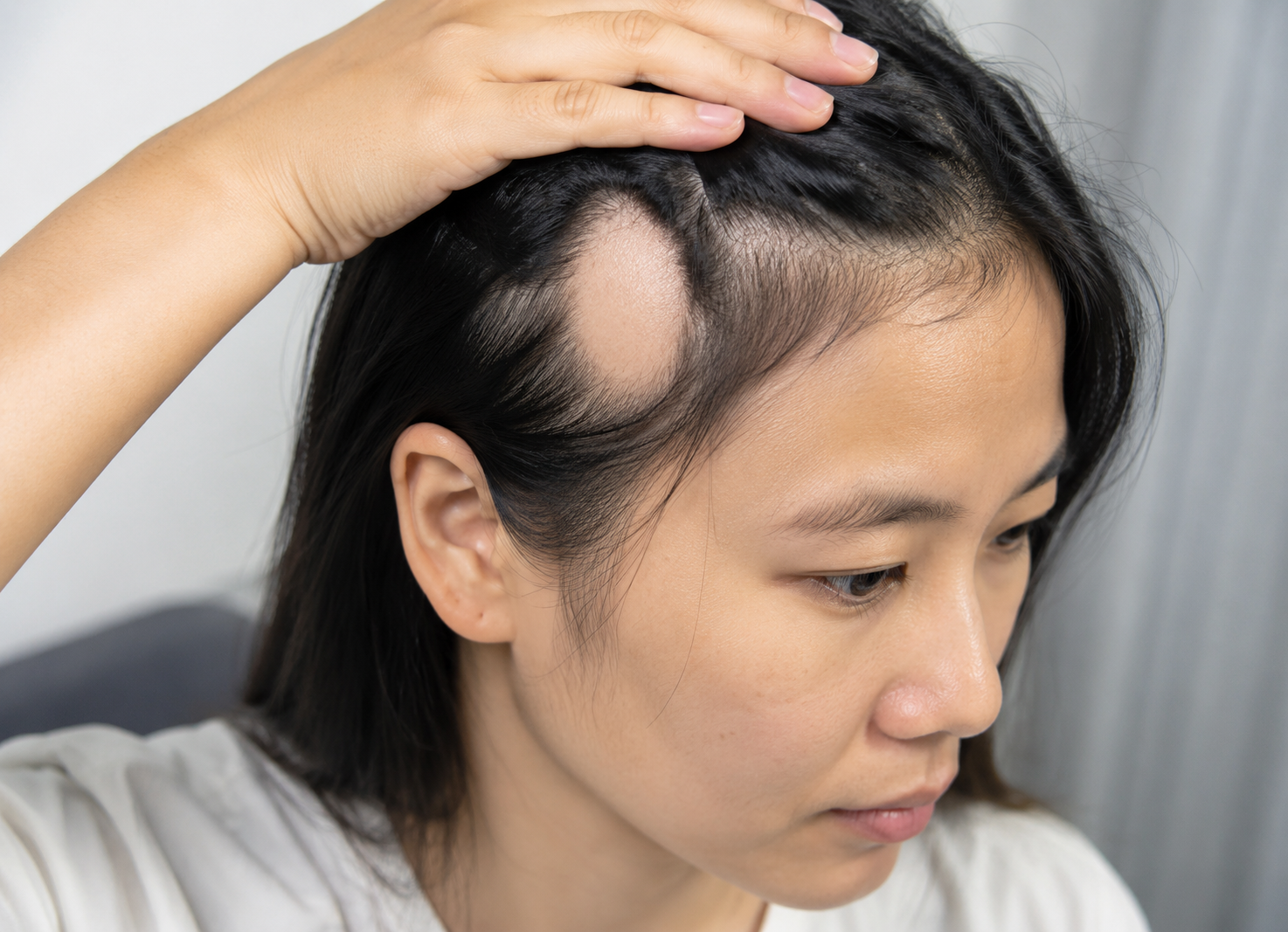
Causes well-defined, oval or round patches of hair loss on the scalp, though the eyebrows, eyelashes, beard, and body hair may also be affected. The underlying scalp skin in these patches typically appears smooth and unaffected.
Alopecia Totalis
Refers to complete loss of scalp hair, representing a more extensive progression of the autoimmune process.
Alopecia Universalis
The most severe form, involving complete loss of all body hair – scalp, eyebrows, eyelashes, and body hair – and is associated with a more guarded prognosis for regrowth.
The course of alopecia areata is inherently unpredictable. Spontaneous regrowth can occur, particularly in those with limited, patchy involvement and an earlier age of onset – but recurrence is common, and some patients experience progressive or persistent hair loss. This unpredictability is one of the reasons specialist oversight is valuable throughout the management of the condition.
Signs & Symptoms
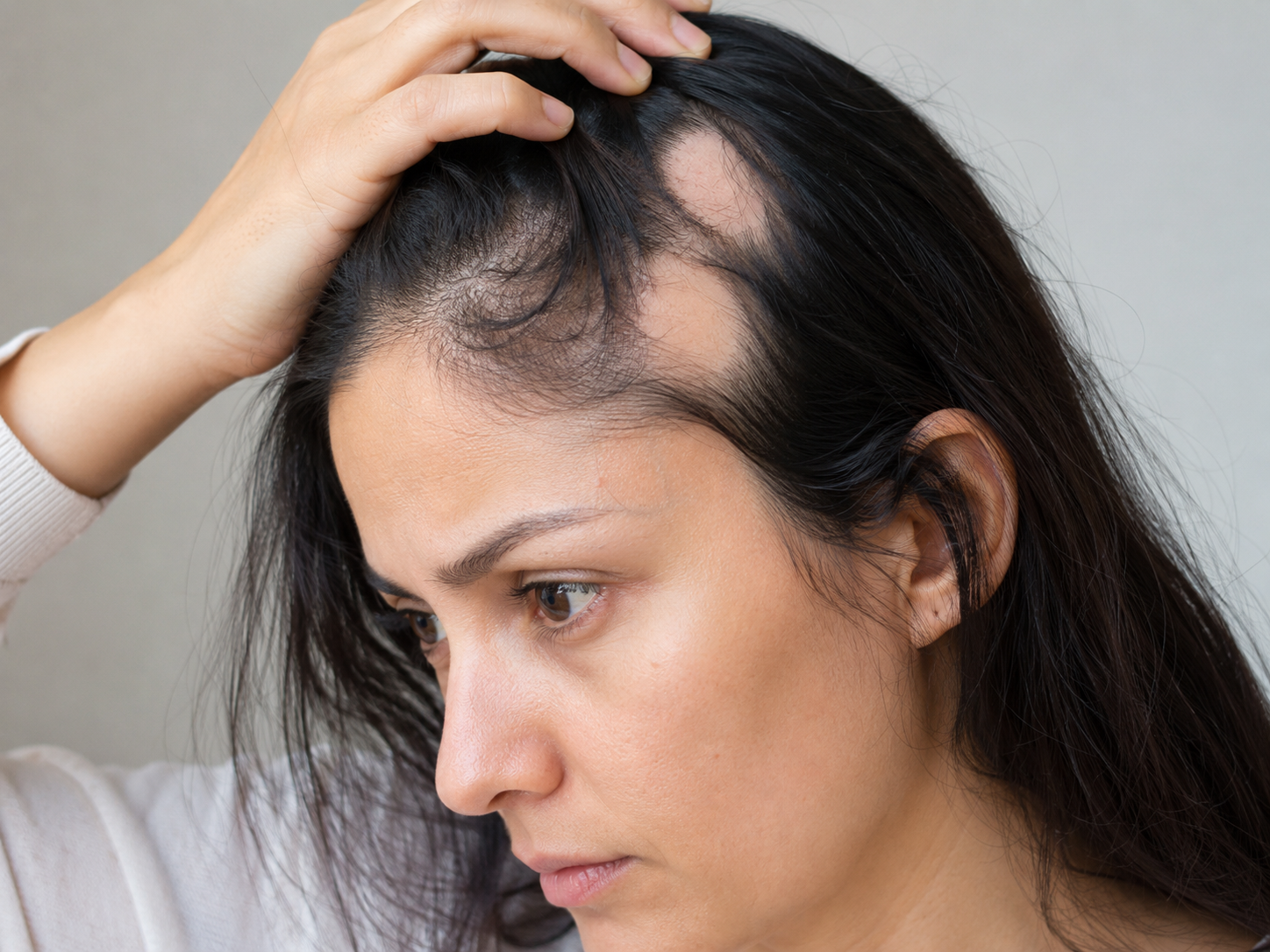
Well-defined, smooth, round or oval patches of hair loss on the scalp or elsewhere on the body
‘Exclamation mark’ hairs – short, tapered hairs at the edges of active patches – which are a useful diagnostic indicator
Nail changes in some patients, including pitting, ridging, or roughness
Sudden onset, often without preceding symptoms
Spontaneous regrowth in some patches, while new patches may appear elsewhere
Triggers & Diagnosis
The underlying driver of alopecia areata is immune dysregulation, and many patients have a personal or family history of other autoimmune conditions, including thyroid disease, vitiligo, or atopic dermatitis. The precise trigger for any individual episode is often unclear, though periods of significant physical or emotional stress are frequently reported as preceding events.
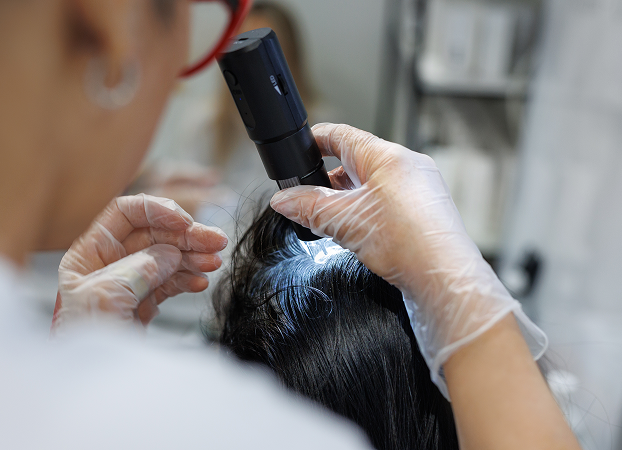
Diagnosis is primarily clinical, based on the pattern and characteristics of hair loss. In less straightforward presentations, a scalp biopsy or trichoscopy (dermoscopic examination of the scalp) may support the diagnosis. Blood investigations are often performed to assess for associated conditions such as thyroid dysfunction.
Treatment at Skincodes
There is currently no curative treatment for alopecia areata, but a number of approaches can suppress the autoimmune activity driving hair loss, support regrowth, and reduce the likelihood of further progression.
Intralesional Corticosteroid Injections
One of the most established treatments for patchy alopecia areata. Small amounts of corticosteroid are injected directly into affected areas of the scalp, suppressing the localised immune attack on hair follicles and stimulating regrowth. Treatment is repeated at regular intervals and assessed over time.
Topical Immunotherapy
A more specialised treatment approach used in cases that have not responded to corticosteroids or where hair loss is more widespread. It works by inducing a controlled allergic reaction on the scalp that modulates the aberrant immune response driving hair loss.
Topical and Systemic Agents
Including topical minoxidil to support follicular activity, and in selected cases systemic immunosuppressants or JAK inhibitors – may be incorporated depending on the severity and course of the condition.
Monitoring and Review
A central part of managing alopecia areata. Dr Ang will assess your response at each stage and adapt the approach accordingly, taking into account both the clinical picture and the impact the condition is having on your daily life.
Why Choose Specialist Surgical Care
Dermatological surgery performed by a specialist offers distinct advantages:
- Accurate pre-surgical diagnosis with dermoscopy. Lesions are assessed carefully as appearances can be
misleading without specialist evaluation - Appropriate margin assessment for cancer excisions based on lesion type and guidelines
- Histological analysis of all removed tissue to confirm diagnosis and clear margins
- Minimally invasive techniques selected to optimise cosmetic outcomes
- Structured follow-up and surveillance for ongoing skin health